
New Trails, New Trees, New Tools at Oxford Conservation Park
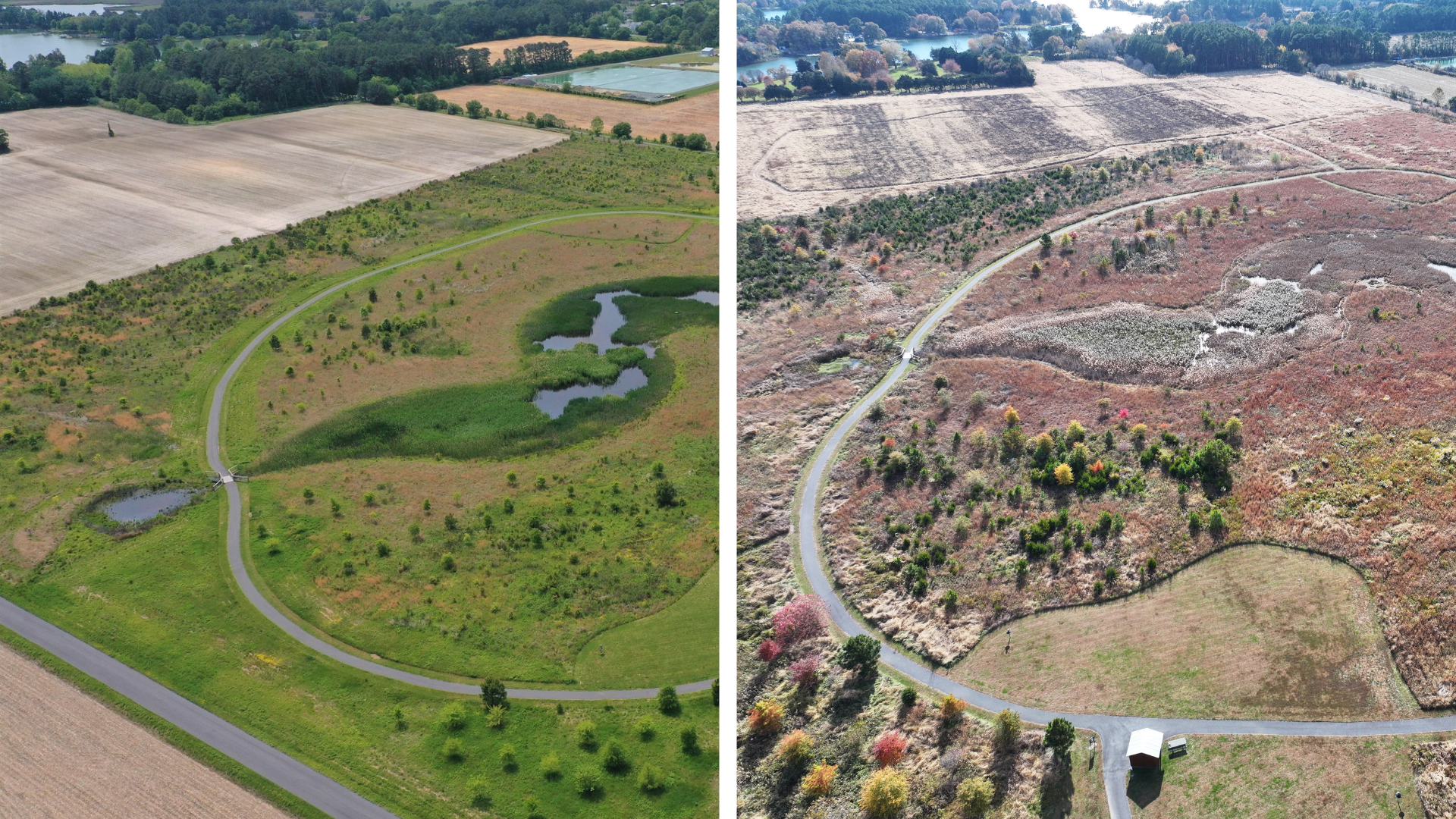
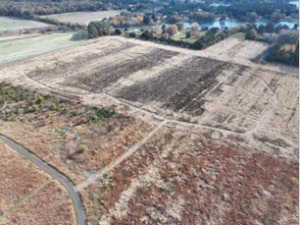
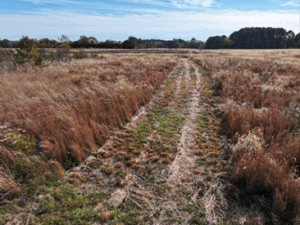 With the winter solstice quickly approaching, days are getting shorter, temperatures are dropping, and it almost feels like the landscape’s rhythm is on pause for the next few months. But at Oxford Conservation Park, the landscape continues to evolve–the trails are longer and more native plants are thriving. At the end of October, the “Back 30” section of the park was officially activated with the mowing of new trails throughout the meadow. ESLC’s staff visited the park recently to document the progress by air and foot – capturing drone photography of the updated trail network and enjoying a late-fall afternoon of brand-new public access and dormant meadow beauty. These new trails double the length of the existing trails, giving the park just over a mile of pavement and grass paths for visitors to explore through the meadows.
Similar to the main park, the “Back 30” was formerly an agricultural field of rotational grain crops, enhanced with plantings by the Natural Lands Project back in April of this year, a variety of native short-stature species — such as little bluestem, spotted bee-balm, and butterfly weed — were planted to promote a healthy and diverse grassland habitat.
 The additional acreage will be teeming with life in the spring, from sparrows and butterflies to woodcocks and beetles. Birdwatchers have also reported several Northern bobwhite sightings over the last year, giving hope that the newly activated acreage will support a growing quail population.
In addition to the newly mowed trails, the park has been stewarded in additional plantings this past fall. Flowering dogwoods, serviceberry, fringetree, sweetbay magnolia, Eastern redbuds, and willow oaks have been planted along Bonfield Manor Road, which will provide a splendor of beautiful flowering colors throughout the year. In early November, a group of volunteers made significant progress in managing vegetation under the direction of the Friends of Oxford Conservation Park. Volunteers planted dogwoods, viburnum shrubs, and trimmed existing virburnums. They also removed dead, invasive pear trees throughout the park.
Finally, to continue managing the invasive species present throughout the park and to better enhance the meadow habitats, a controlled burn is being planned by the Natural Lands Project, the Maryland State Forest Service, and Talbot County Parks and Recreation. While the burn will likely not occur until later this winter or spring, ESLC will be helping to facilitate a community presentation about prescribed fire for habitat management – including its benefits and safe application. This presentation will be held on Thursday, January 22, 2026 from 5:30 – 6:30 PM at the Oxford Community Center. Registration will be available soon.
The Oxford Conservation Park Project is funded by a multi-year grant from the Chesapeake and Atlantic Coastal Bays Trust Fund, a program of the Maryland Department of Natural Resources, to the Washington College Natural Lands Project in partnership with ESLC, Talbot County Department of Parks & Recreation, and the Friends of Oxford Conservation Park.