ESLC and Native Shorelines complete pilot QuickReef project in Dorchester County
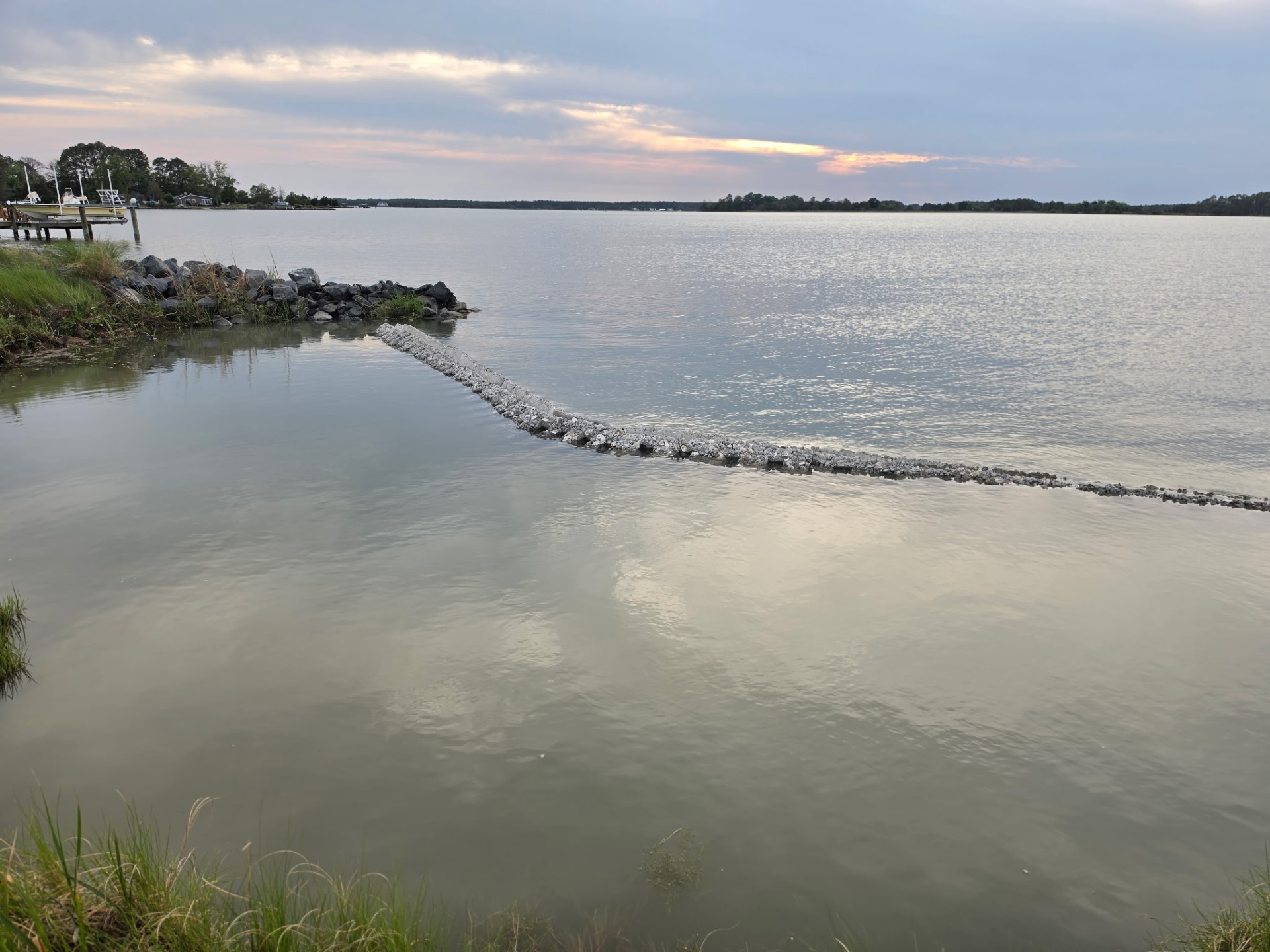
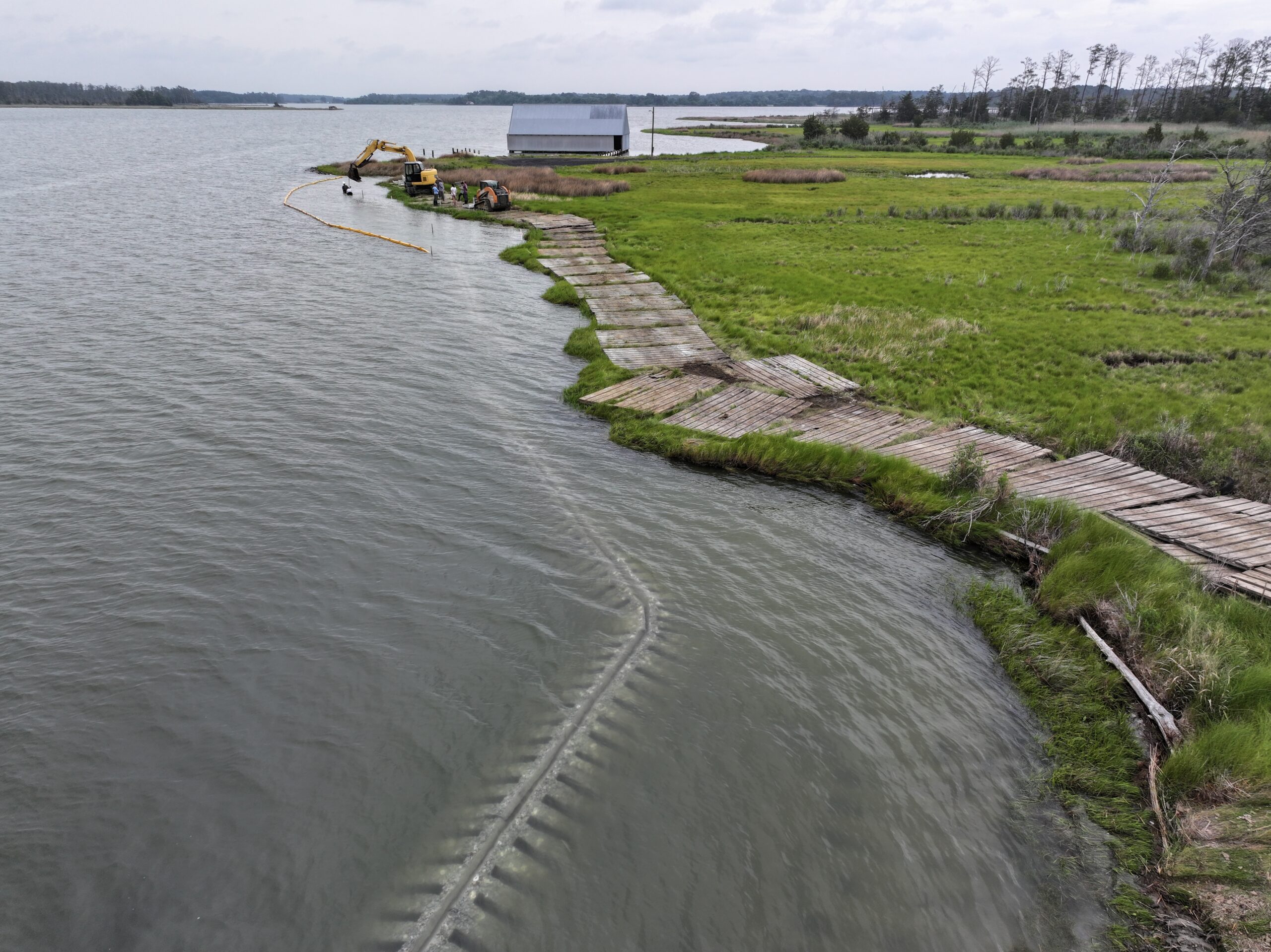
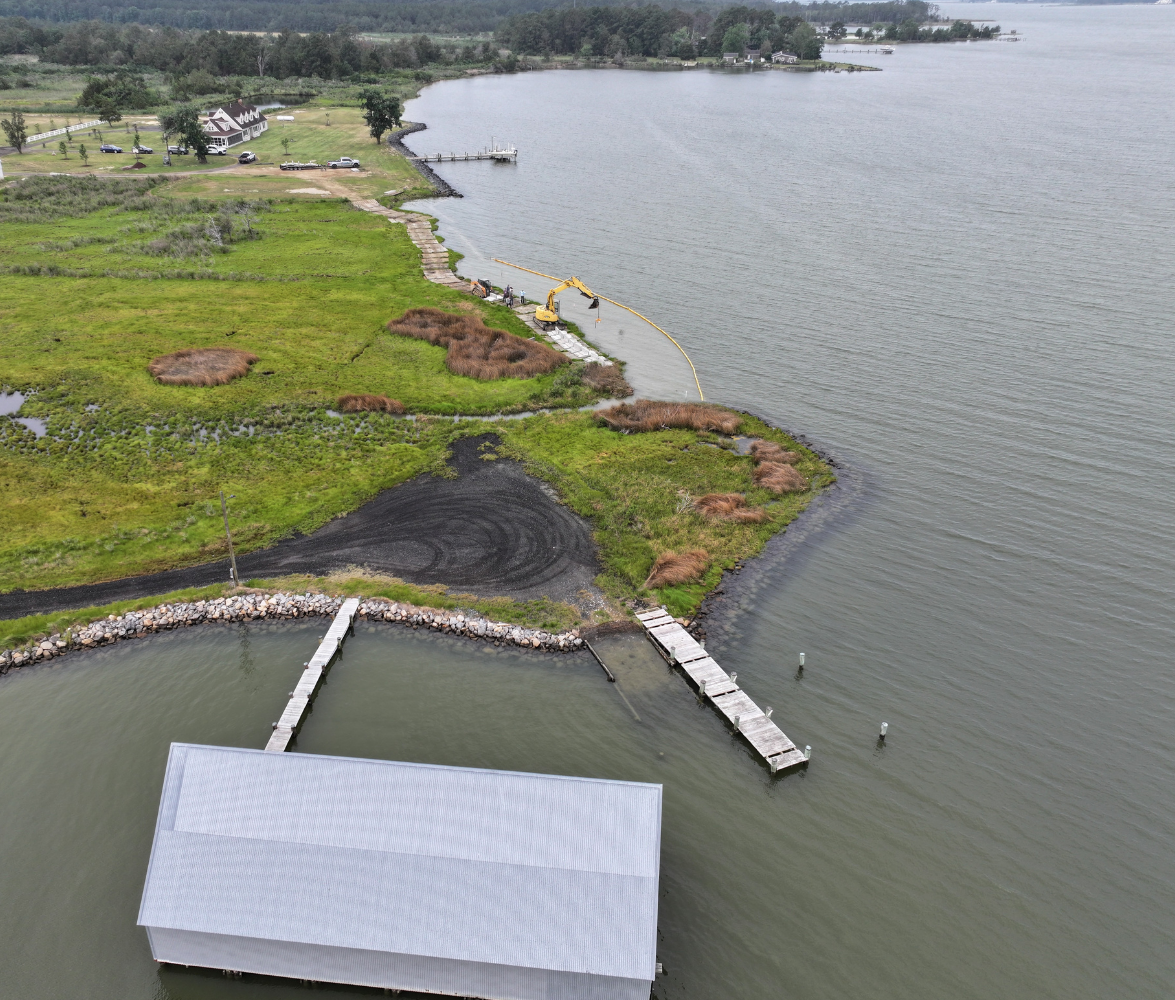
Eastern Shore Land Conservancy and Native Shorelines, a Davey Tree Company, are excited to announce that we have successfully completed the first QuickReef living shoreline in the state of Maryland! Our pilot project, managed by ESLC’s interim Director of Land Conservation Larisa Prezioso, now protects a beautiful expanse of tidal saltmarsh habitat fronting a 357-acre ESLC conservation easement in Dorchester County. This project is made possible through a grant from the National Fish and Wildlife Foundation’s National Coastal Resilience Fund (NCRF) with support from the National Oceanic and Atmospheric Administration (NOAA).
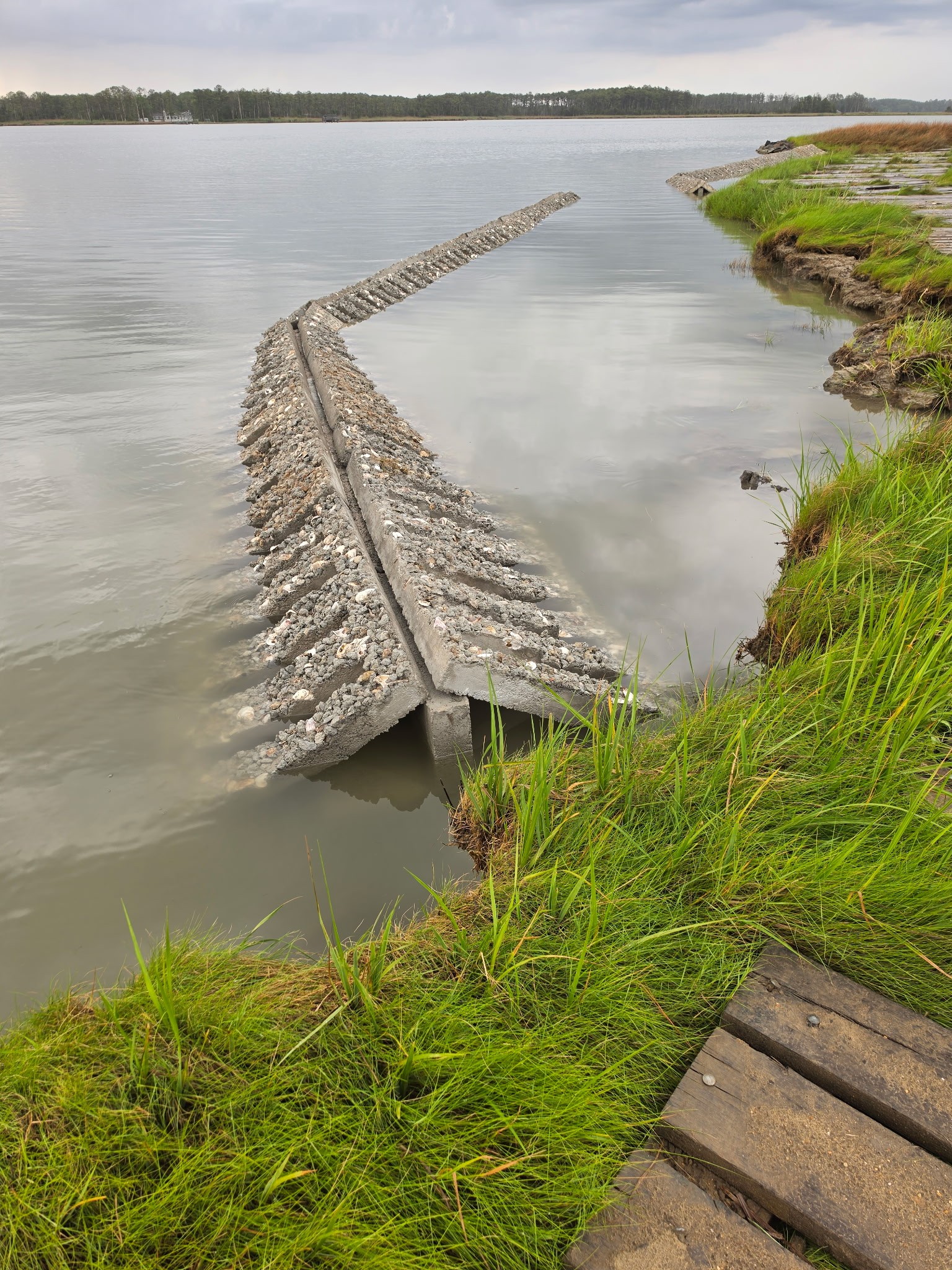
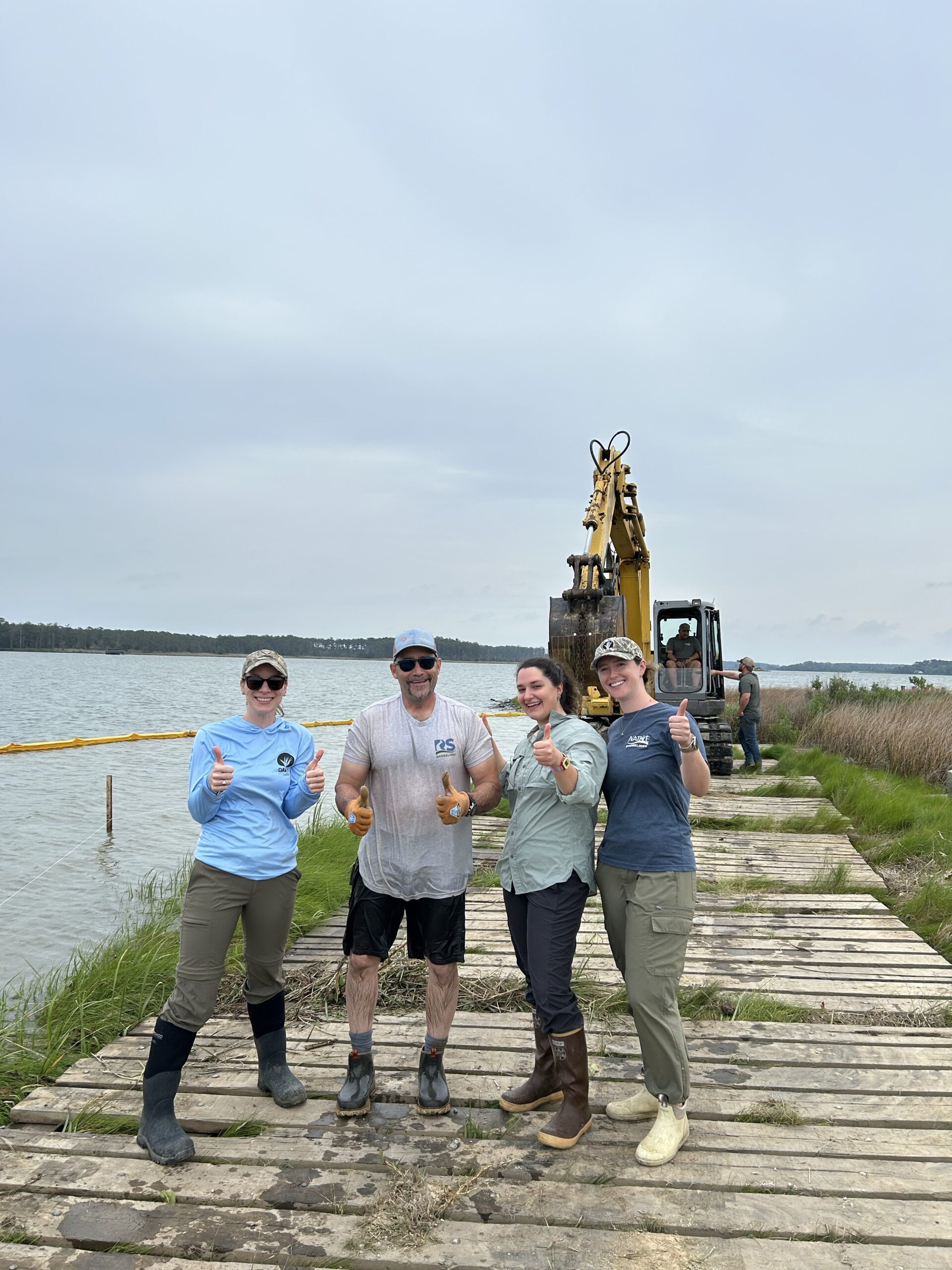
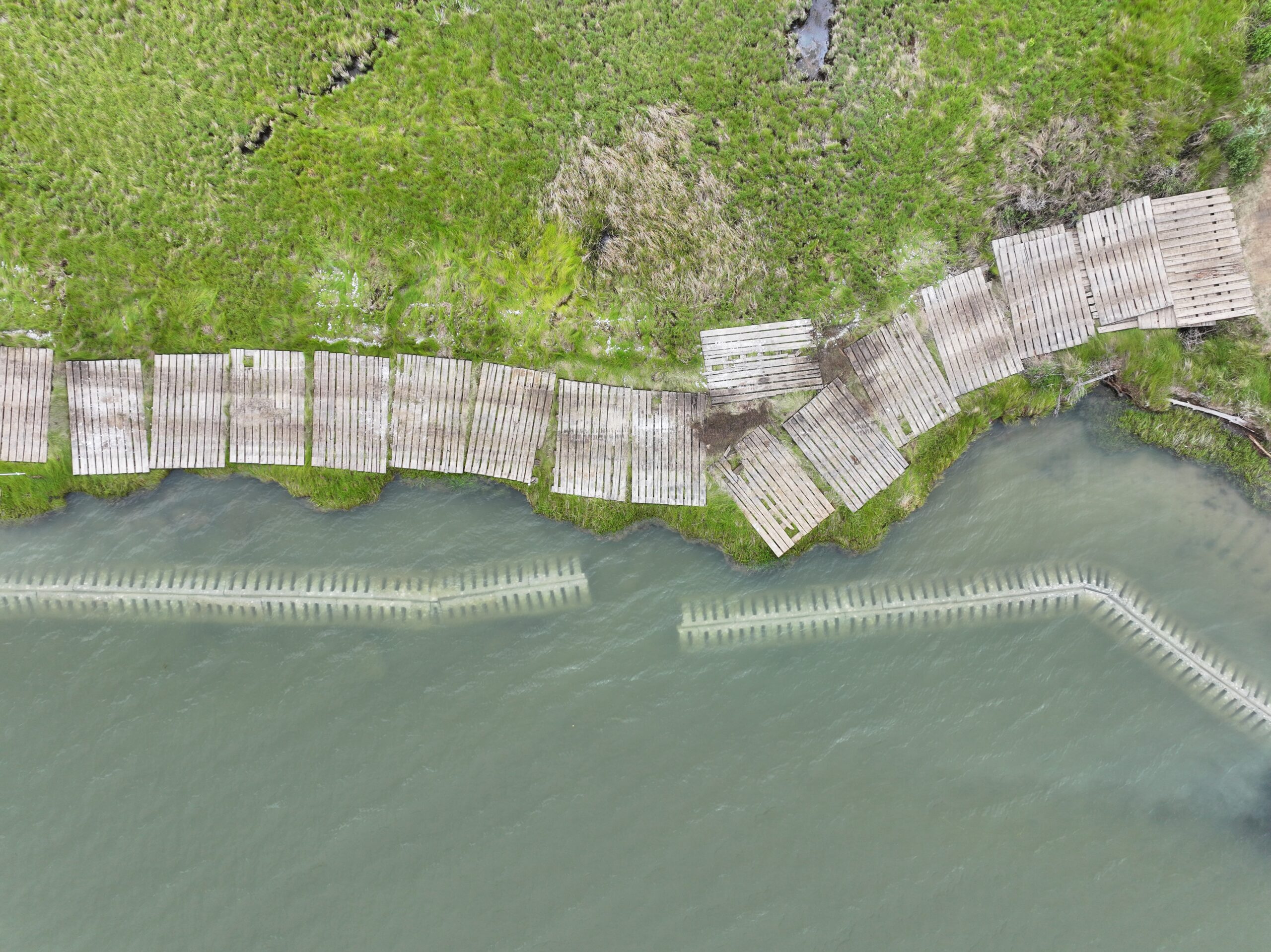
In only three days, the team installed four low profile sills (a total of 312 linear feet), protecting roughly 352 feet of shoreline. Marsh mats were used to minimize construction impacts along the shoreline and access area, and no permanent impacts were made to the existing tidal wetland. “I think the project was very successful,” commented Native Shorelines’ Lucy Deignan. “We were able to install everything very efficiently and Larisa was absolutely wonderful to work with. The landowner was very happy and we’ve already received a lot of interest from other people in the area. As a part of this grant we’re looking at 15 other ESLC easements and assessing them for living shoreline potential.”
“I’m delighted that we were able to make this happen. Building the pilot site has so much potential to expand the availability of a resource to a region that could greatly benefit,” commented ESLC’s Larisa Prezioso. More than half of ESLC’s 345 protected properties are located along major rivers in six counties in the mid- and upper-Chesapeake Bay region, amounting to more than 935,961 linear feet (or 177 miles) of vulnerable shoreline. In 2021, ESLC surveyed conservation easement landowners and found that more than a third of respondents were concerned about shoreline stabilization and loss of habitat. QuickReef living shoreline implementation would create a new, affordable opportunity for landowners to access a fast, cost-effective shoreline resiliency solution while simultaneously providing living shoreline benefits.
QuickReef blocks are comprised primarily of native coastal materials including limestone marl and recycled oyster shells, all sourced from North Carolina. Sited between intertidal and subtidal regions, the nooks and crannies of each QuickReef block provide aquatic environment enhancement and an ideal substrate for oyster recruitment. The 115 QuickReef projects already completed in North Carolina and Virginia have shown visible marsh improvements. QuickReef is currently being studied at the University of Maryland Center for Environmental Science to see if the promising oyster growth seen within the sills might be due to a naturalized microclimate created by the interlocking structures.