
ESLC conserves two historic farms with Program Open Space funding, protecting working farmland, waterway buffers, and wildlife habitat
With funding from Maryland’s Program Open Space, Eastern Shore Land Conservancy (ESLC) has permanently protected two historic farms: 28-acre Apotheosis Farm in Kent County, protected through Program Open Space Stateside, and the Cheezum family’s 217-acre grain farm in Caroline County, conserved under the Eastern Shore Heartland Rural Legacy Area, part of Program Open Space.
“These two easements protect public access for outdoor recreation, diverse wildlife habitat, threatened tree species, and local waterways. They protect not only an active grain farm, but one of the historic mill sites that originally bolstered the very grain economy still supporting the Eastern Shore today,” commented ESLC President and CEO Steve Kline. “ESLC has permanently conserved more than 24,270 acres through Program Open Space. We’d like to maintain that momentum. ESLC will continue to advocate for the protection of this funding as we approach the 450th Maryland General Assembly.”
Apotheosis Farm
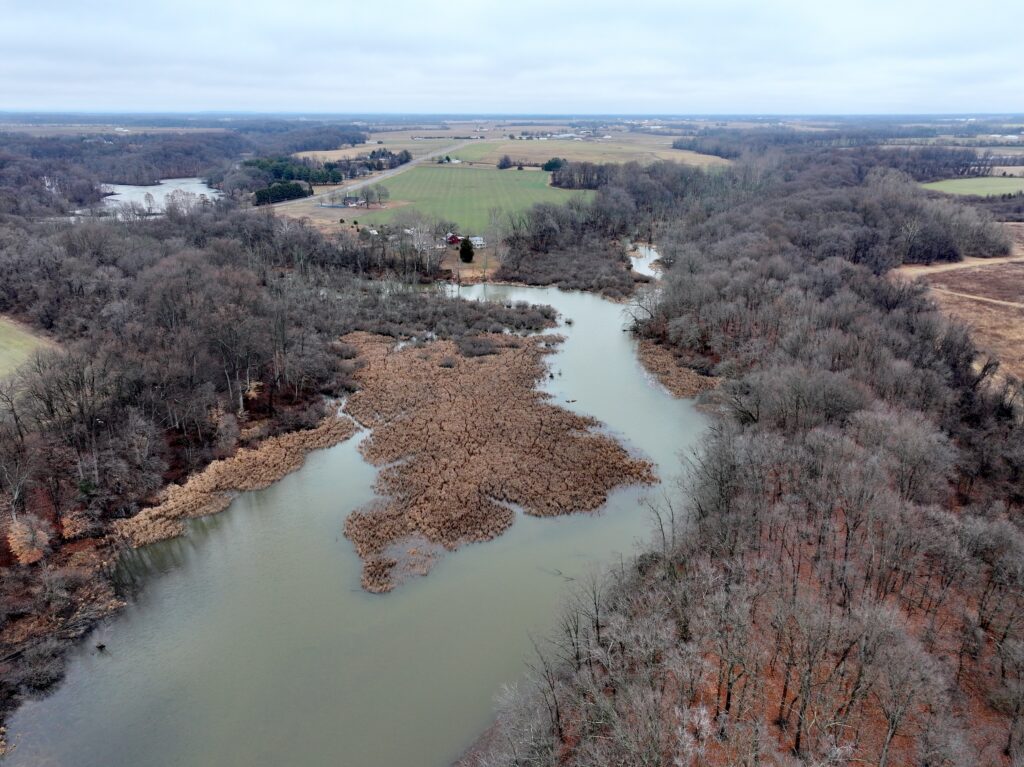
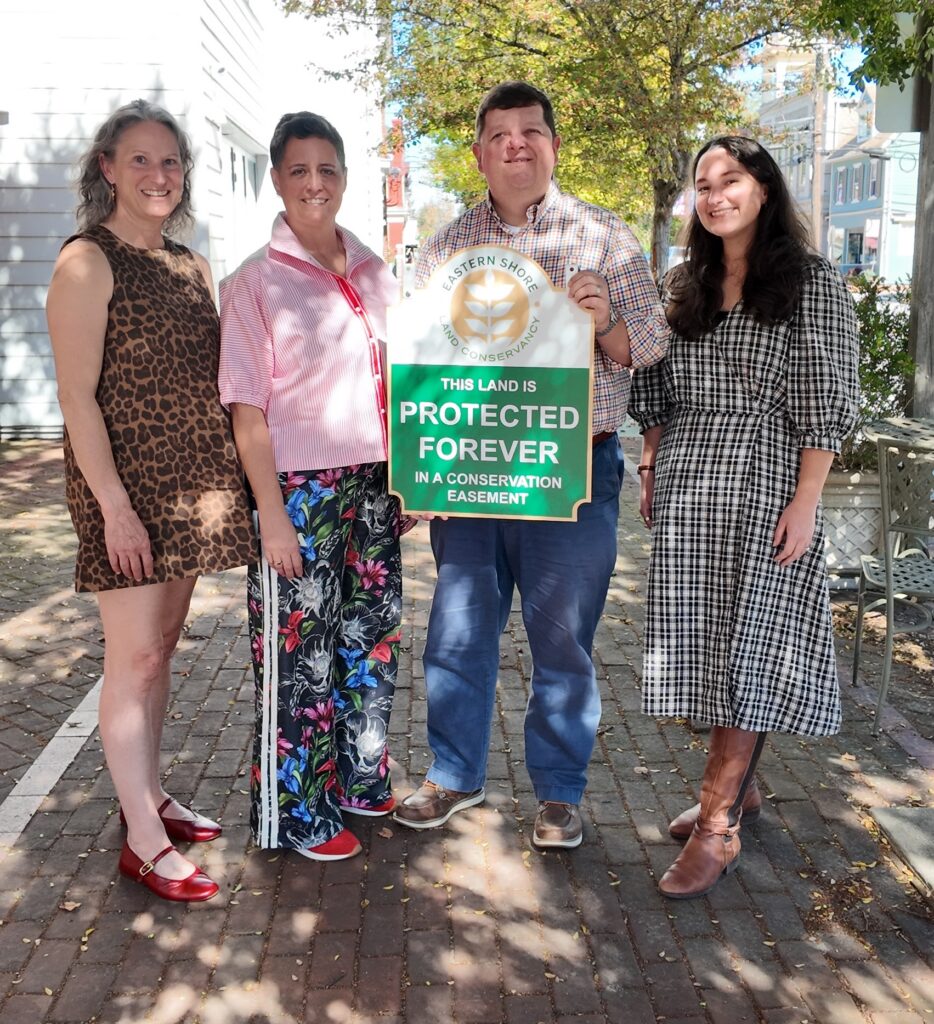
Owned by Heather and Deborah Mizeur, Kent County’s Apotheosis Farm has been farmed, milled, and lived on for more than 300 years. “We see ourselves as its current caretakers, not its last ones,” commented Heather and Deborah. “An easement makes sure that whoever comes after us inherits woods, wetland, and meadow rather than a subdivision. ESLC knows this landscape and has a long track record here, and partnering with Program Open Space let us protect it permanently.”
The 28-acre farm will now forever provide uninterrupted scenic views both on land along the Chesapeake Country Scenic Byway and along 1,650 feet of Morgan Creek water frontage. All tributaries on the property lead to the Chester River and are protected by 100-foot forested buffers, furthering the goals of the Chesapeake Bay Critical Area. A small portion of the property increases public fishing access to Urieville Lake, solely when in compliance with the Maryland Department of Natural Resources’ strict “Leave No Trace” policy which requires packing out of all waste and marine debris.
In addition to natural shoreline, the easement also protects open grasslands, more than four acres of tidal wetlands, a small herb farm, and “a remarkable range of native and naturalized medicinal plants.” More than 19 acres of deciduous woodlands provide critical habitat for FIDS (forest interior dwelling species of birds) and dense populations of wildlife including eagles, osprey, herons, songbirds, woodpeckers, frogs, turtles, beaver, deer, fox, and wild turkeys. The woodlands, home to a remnant stand of healthy native ash trees, will be stewarded through a forest stewardship plan. 150 more trees will be planted on-site at the end of October by ShoreRivers.
“Land and water are closely tied here. Almost everything that happens on a field or in a woodlot ends up in a creek, then a river, then the Bay,” commented Heather Mizeur. “The Shore also still has a working agricultural landscape and small towns with real history, which is increasingly rare along the East Coast. Development pressure is steady, and once land is broken up, it doesn’t come back. Conservation is the most reliable tool we have to keep this place as it is.”
Samuel Perkins originally bought what is now Apotheosis Farm in 1711 to establish one of the earliest mills in Urieville, a small 18th-century working community that historically supported the area with a grist mill, sawmill, blacksmith, wheelwright, and the county’s only brewery. ESLC’s easement covers the Urieville Miller’s House, built in 1715, and the foundation and mill race of the old Urieville Mill, one of Kent County’s earliest centers of agricultural commerce, and a supplier of grain to Washington’s troops at Valley Forge.
“When we worked on Capitol Hill, we walked through the Capitol Rotunda under Constantino Brumidi’s fresco Apotheosis of Washington nearly every day,” reflected Deborah Mizeur. “When we learned that our mill had supplied grain to Washington’s troops, the name seemed obvious. In plain terms, “apotheosis” means becoming the best version of yourself. We wanted a farm where people and land could both thrive. This conservation easement is a big part of the apotheosis of this land.”
Big Branch Farm
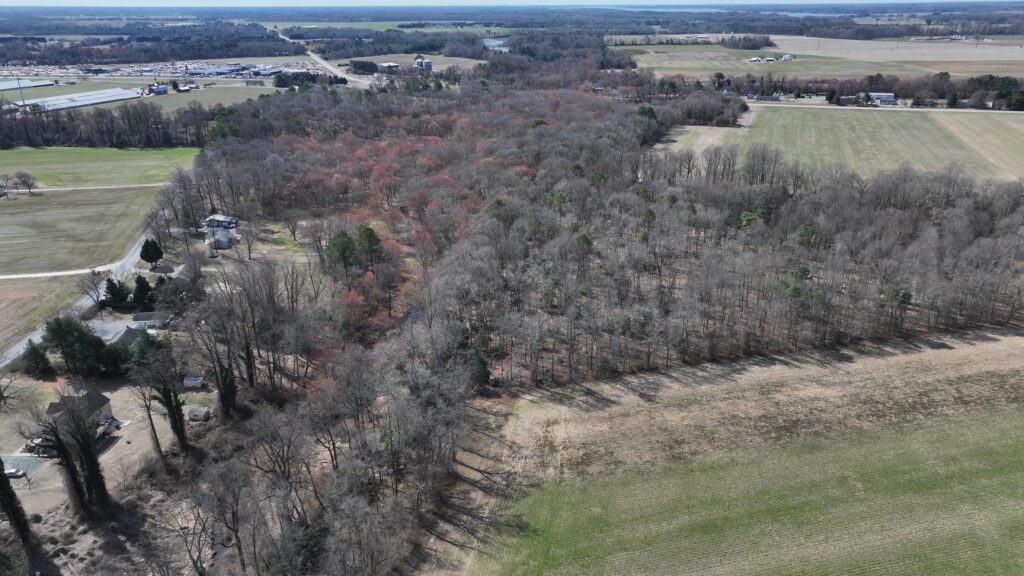
ESLC has permanently protected 217 acres of farmland, owned by the Cheezum family in Caroline County, thanks to the Maryland Department of Natural Resources Rural Legacy Program. Two new contiguous easements conserve more than 175 acres of productive agricultural land, 37 acres of forest, and 4,687 feet of scenic road frontage. More than 6,000 linear feet of Hunting Creek’s stream channels are now protected by 100-foot forested buffers on both sides, maintaining water quality in the Choptank River watershed and providing riparian habitat not only for threatened species of migratory birds, but also the beavers, otters, bats, terrapins, beneficial insects, and other wildlife that depend on these increasingly vulnerable zones for water, food, and shelter.
The property was purchased in the 1940s by the Cheezum family, who have been farming in Preston since the 17th century. These deep roots in livestock, grain, chicken, and dairy farming rooted Thomas and Mary Cheezum’s desire to conserve their land for current and future farmers.
“When I drive to the north end of Caroline County, it cuts very deeply to watch the solar panels go up more and more all the time,” commented Thomas and Mary’s son, Thomas Cheezum. “More land is being covered up. Eventually there’s going to come a time when our land is going to be some of the last land that’s arable. I think that’s a very large reason why we want to keep it open and available. Because a lot of land is not going to be available for farming. There might come a time that it’s not just beneficial from a family perspective, but it’s also essential. That’s our part in stewardship in the long run.”
“There are a lot of things we’re protecting,” continued Eric Cheezum. “From a way of life, to the economy, to the agriculture, to the history—all of it. I’m still running the farm business and I’m training up the next generation of farmers. The guy that works with me is seeing what I’m doing and learning. On some level, we’re stewards of something we’ve come into possession of. Friday afternoon, that 22-year-old that works for me took a very large piece of equipment that he’s learned how to drive and planted a field. He didn’t need me there. That’s why we’re preserving this.”