
By: Autumn Conley, Conservation Assistant at ESLC
A conservation easement is a voluntary legal agreement between a landowner and a government group or conservation organization that restricts development on the property. The easement outlines the conservation values of the land and helps to protect the property’s natural resources, scenic views, agricultural production, wildlife habitat, tributary buffers, and more—all while the landowner maintains private ownership. With a donated conservation easement, the value of the easement (as determined by an appraiser) is treated as a charitable contribution to a qualified conservation organization and may qualify landowners for significant state and federal tax benefits. You can learn more about that by opening the donated easement folio on the ESLC Resources page.
Donated conservation easements have the benefit of often being a fast-tracked route to protecting your property. Due to funding cuts at the state and federal levels, as well as increasingly competitive waiting lists for purchase easements, landowners may be waiting years or more than a decade to just start the protection process. With donated easements, there is generally no wait time, and the property can be protected within a matter of months.
Step 1: Inquiry
- Landowners interested may inquire online, or by contacting Conservation Assistant Autumn Conley at 443-786-8208 or aconley@eslc.org.
- Be sure to provide relevant property information such as the address, tax map and parcel number, and acreage so that staff can complete the necessary intake research.
Step 2: Property Research and Project Assessment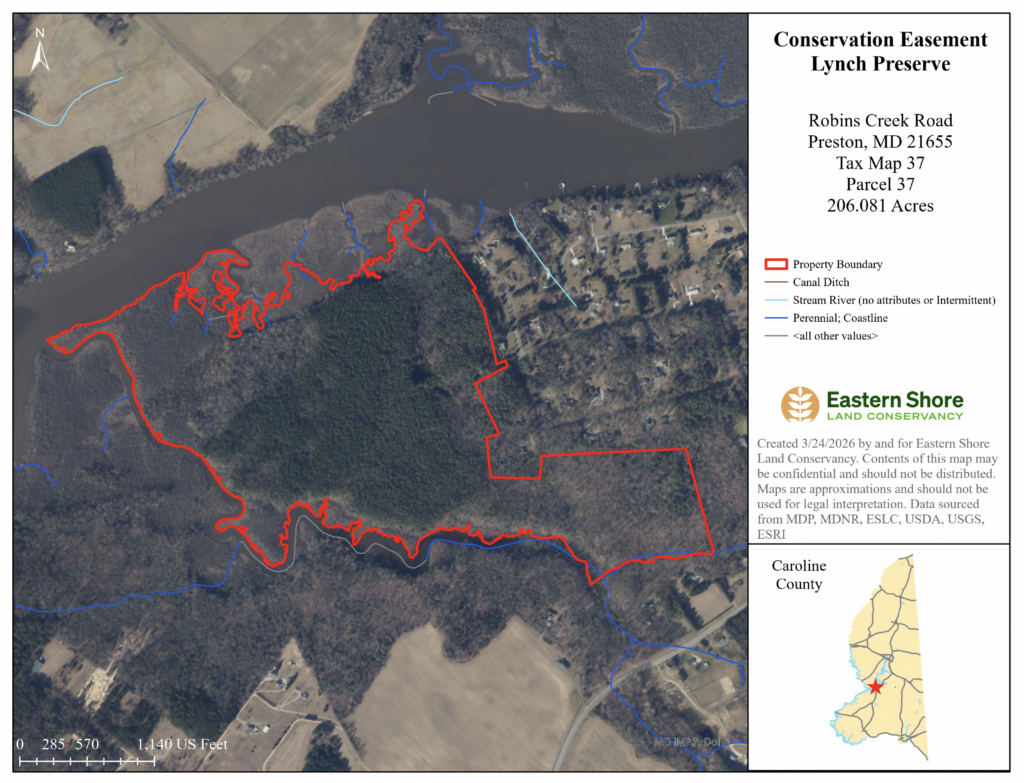
- ESLC staff will conduct background research on the property in order to determine whether the property is eligible for a donated easement. Relevant information such as property size, location, current land use and zoning, ecosystem services and habitat composition, and more are all taken into consideration during the assessment.
- Using ArcGIS applications, staff create a number of visual maps and models to be utilized in this analysis, including future sea level rise projections, wetland and stream maps, topographic maps, aerial maps, and more!
Step 3: Initial Landowner Meeting and Site Visit
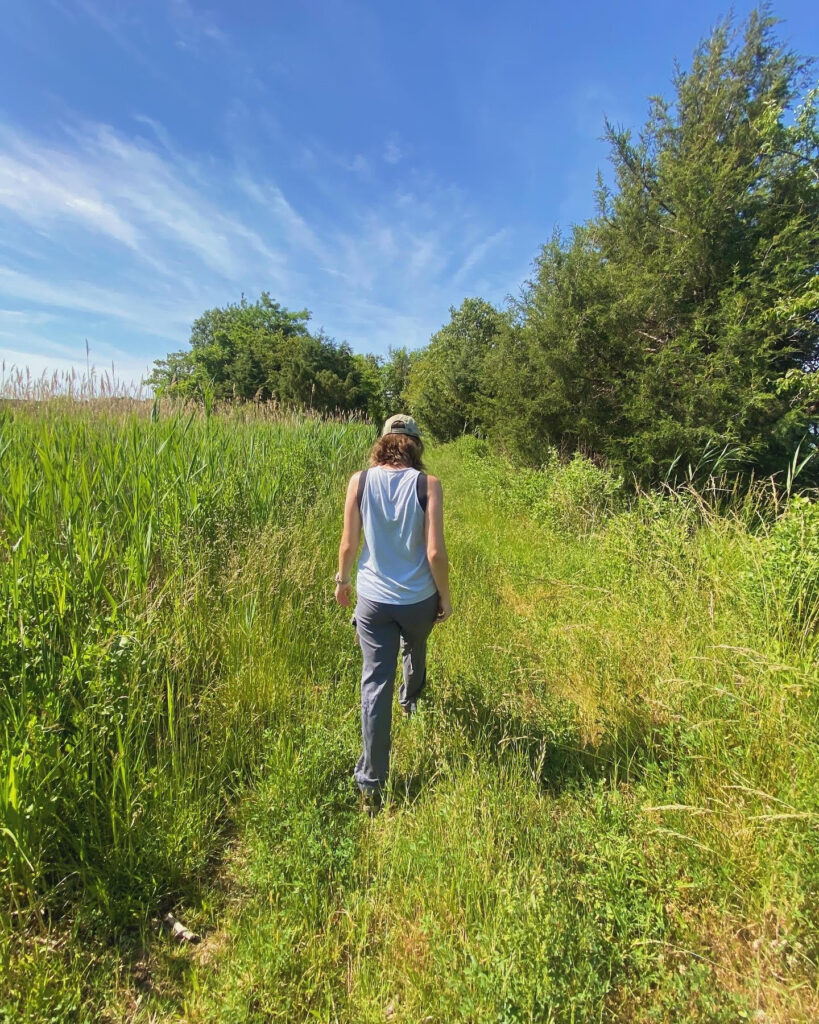
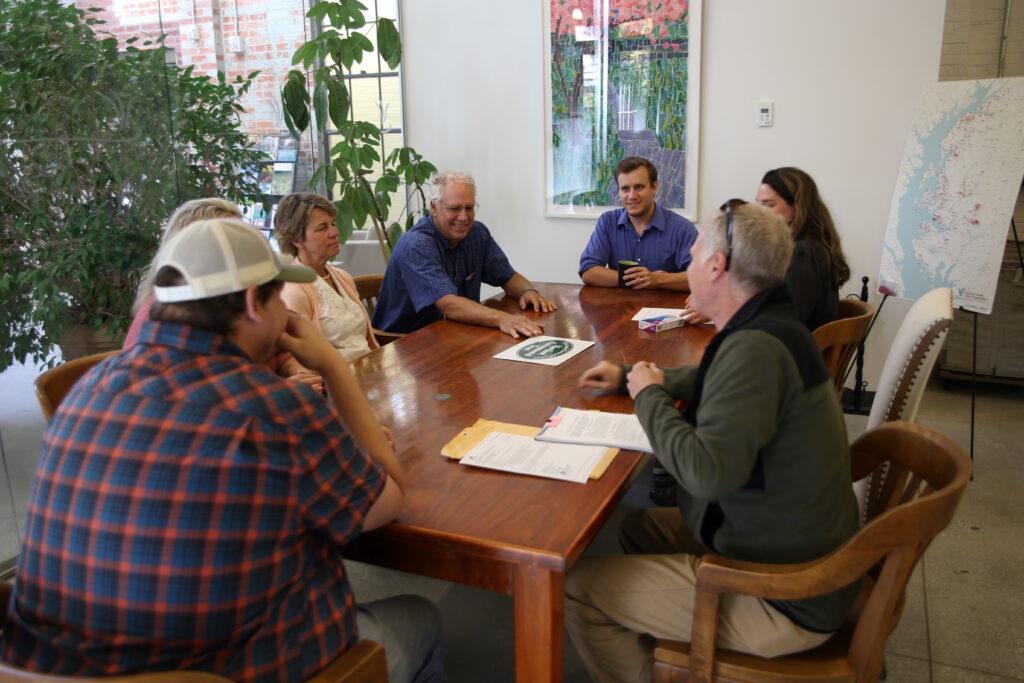
- After determining the property’s eligibility as a potential donated easement project, staff will schedule a time to meet with landowners and visit the property. During this visit, staff will:
- Answer questions related to easements in general and specifically the provisions of your easement- ESLC collaborates with landowners to design personalized easements that protect your long-term conservation goals.
- Assess the conservation values of the property, which are included in the easement document itself
- Discuss the decisions landowners will need to consider during the process, such as:
- Reserved Dwelling Rights: How many residential units would you like to retain on the property?
- Future Ownership and Subdivision: Do you want the ability to subdivide the property in the future, or should it remain under common ownership?
- Long-Term Vision for the Property: Do you plan to pass the land down to your children or heirs? Would you consider public access on the property one day?
- Partnership with the State: Some easements may be co-held with the Maryland Environmental Trust (MET), the state’s public land trust. While co-held easements may take slightly longer to finalize, they can offer benefits such as additional tax incentives and additional security of the easement’s legal protections.
Step 4: Board of Directors Approval
- The decision to accept a conservation easement donation lies with ESLC’s Board of Directors. Once landowners have decided to move forward with a conservation easement, ESLC staff present the project and all relevant information to the Board at one of their quarterly meetings. Board members may ask questions, raise concerns, and discuss the proposal before ultimately voting to approve/reject the project.
Step 5: Due Diligence Phase
- Engagement Letter and Deposit
- Landowners are asked to sign an engagement letter that outlines ESLC’s responsibilities in the easement process, as well as the fees associated with a donated easement.
- A deposit on the fees for the project is collected with the signed engagement letter, which will be deducted from the final fees of the project
- Title Work
- A local title company researches the property and provides ESLC with a title report, copies of associated deeds, and a chain of title.
- ESLC staff reviews these materials to ensure that there are no liens that would prevent the easement from proceeding and that any existing mortgages/deeds of trust are paid off or subordinated.
- Mortgage Subordination
- If there is an existing mortgage, ESLC staff works with both the landowner and the lender to ensure the mortgage is subordinated, meaning that the easement will take legal priority.
Step 6: Baseline Visit to the Property
- ESLC staff visit the property and meet with landowners to document the conservation purposes and current conditions of the property. This documentation forms the “baseline report” to be included in the easement.
- The baseline provides a reference point for future monitoring visits to track any changes and ensure compliance with the easement.
- Photos are taken of existing structures, habitat types, and any areas of concern (such as eroding shorelines).
- Aerial imagery is also collected by one of ESLC’s licensed drone pilots.
Step 7: Easement Drafting and Review
- ESLC staff draft the easement to reflect both the property’s conservation values and the landowner’s long-term vision for the land.
- Landowners are given the opportunity to review and comment on the draft to ensure the language is clear and aligned with their goals.
- If ESLC is the sole-holder (i.e., the easement is not co-held with MET), a legal review will be conducted prior to finalization.
Step 8: Easement Signing Event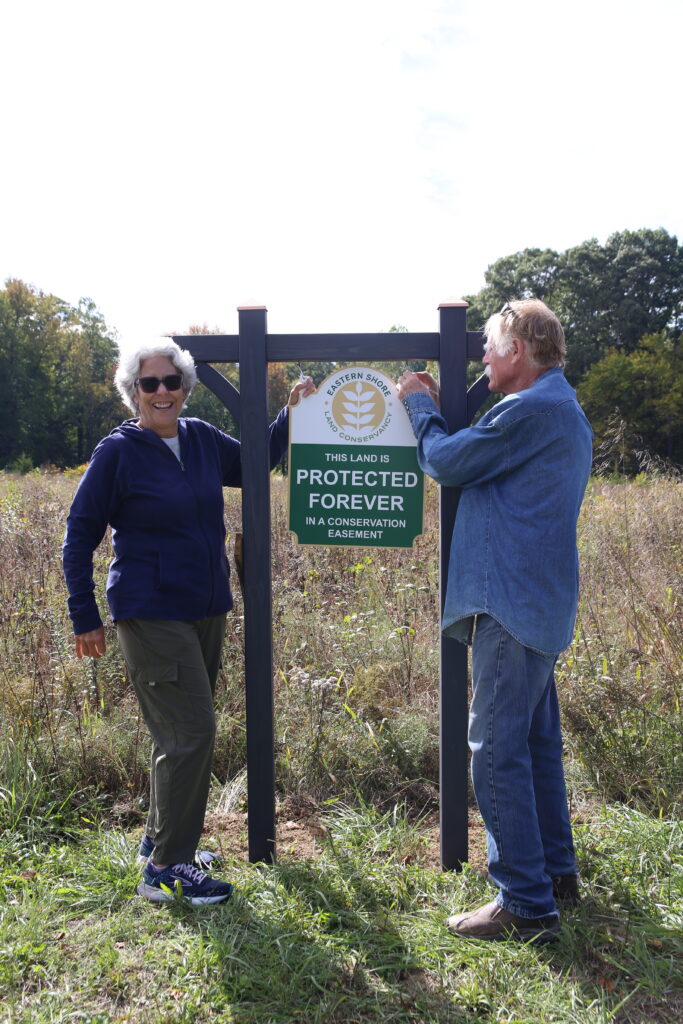
- Depending on landowner preference, a signing event can be held at the property itself or in ESLC’s office in downtown Easton.
- Easement documents are signed by the landowner and ESLC’s President and notarized.
- Once signed, the property is officially protected and added to ESLC’s conserved lands map.
- Landowners may choose to be interviewed by ESLC’s communications team to help share their conservation story.
- Landowners receive a sign to display on the property indicating its status as permanently preserved land!
Step 9: IRS Form 8283
- After the signing, ESLC will provide the landowner with a letter acknowledging that a gift was received, along with a copy of the recorded easement and a copy of the required 8283 form.
- To possibly be eligible for any federal tax deductions associated with a donated conservation easement, landowners will need to:
- Obtain a qualified appraisal to determine the value of the easement, dated within 60 days of the easement signing.
- Complete IRS Form 8283, indicating the appraised value of the charitable gift.
- Have the form signed by both the appraiser and ESLC, acknowledging the receipt and nature of the gift.
- Submit the form with their federal income tax return.
- Per IRS guidelines, ESLC cannot act as an advisor for the purposes of helping you determine if an easement fits your legal or financial situation. Additionally, ESLC staff are not trained legal, financial or tax professionals and thus are not qualified to provide this kind of advice. ESLC strongly encourages you to consult with a qualified independent professional to determine if an easement fits your situation.