

Keeping Land Conservation a Priority with New Chesapeake Bay Agreement Approval
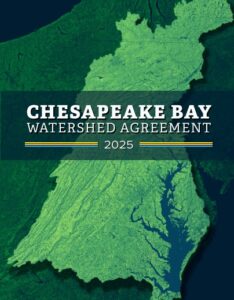 Earlier this month, Chesapeake Bay leaders approved a new agreement establishing a 2040 deadline for restoring the health of the nation’s largest estuary. In advance of the agreement’s adoption, ESLC submitted stakeholder feedback on the draft update of the Chesapeake Bay Agreement. “There are multiple sections, most especially Protected Lands, where the draft Agreement would be strengthened by the specific mention of land trusts,” wrote Steve Kline, ESLC’s President and CEO. “Land trusts like ESLC are instrumental in meeting land protection goals, working both with landowners to tailor perpetual land preservation solutions and with conservation partners to assemble the funding necessary to get these projects completed.”
ESLC is encouraged to see land conservation included in the plan’s goals. At the same time, much of the early public discussion—and many statements from regional leaders—have centered almost exclusively on pollution reduction and wetland restoration. These are essential strategies, but the disproportionate focus risks overshadowing the critical role that land conservation plays in the health of the Bay.
We cannot have healthy waterways without healthy land. Every acre of forest, farmland, and wetland ESLC protects acts as a natural filter, reducing runoff of nitrogen, phosphorus, and sediment, the very pollutants choking the Bay. Land conservation isn’t just about scenic views; it’s a frontline strategy for meeting water quality standards and buffering communities against climate impacts like flooding and rising temperatures.
Climate change amplifies the challenge. Heavier rains mean more stormwater, and sprawling development accelerates runoff, leading to more pollutants in the Bay. Conserved lands absorb water, store carbon, and maintain biodiversity. Without a commitment to land protection, we risk undoing decades of progress every time a storm hits.
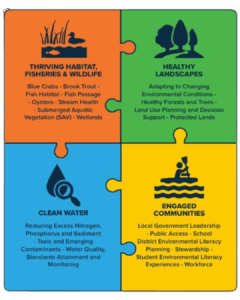 The new 2040 deadline reflects the magnitude of the problem, but it also makes clear that engineered solutions alone will not be enough. Land conservation is cost-effective, permanent, and equitable. It supports rural economies, sustains agriculture, and ensures public access to nature, outcomes that deserve to stand alongside other restoration priorities.
As discussions continue among policymakers, partners, and the public, ESLC will work to ensure land conservation stays at the center of the conversation. It is not a secondary goal; it is the foundation upon which a cleaner Bay and a more resilient climate future must be built.