
Maryland DNR kicks off Roots for Resilience initiative with key partners ESLC, Lower Shore Land Trust, and Mid-Atlantic Audubon
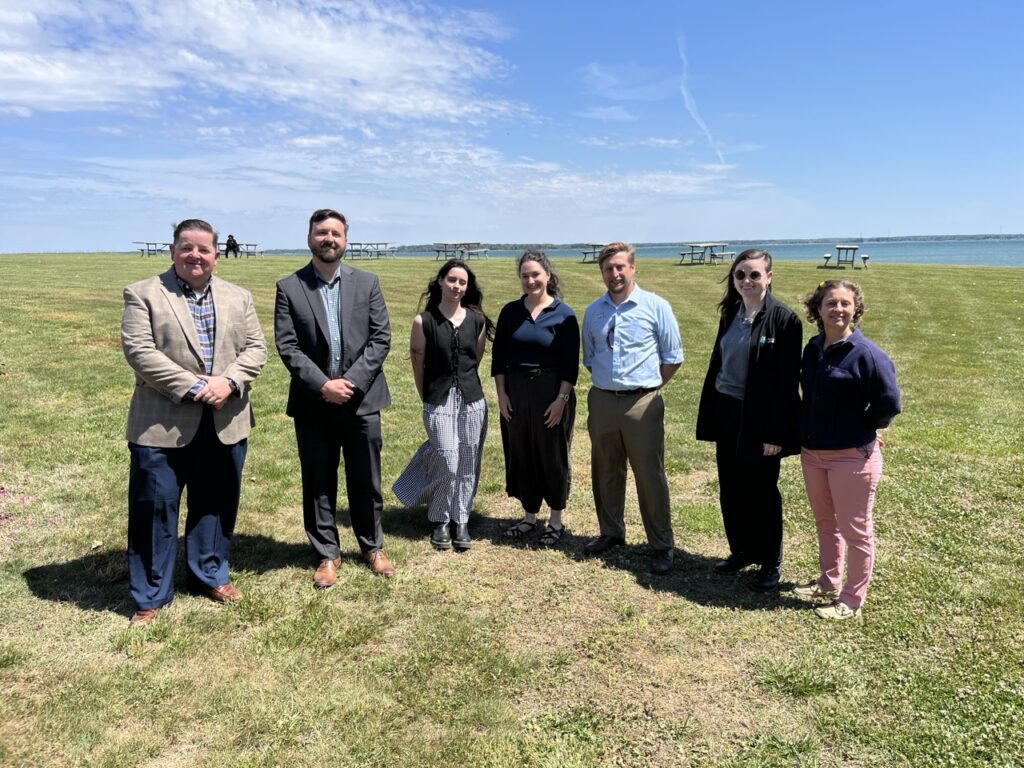
ESLC is pleased to be a key partner of the new Maryland Department of Natural Resources’ initiative Roots for Resilience: Strong Roots for a Changing Landscape. Funded through a Climate Pollution Reduction Grant from the U.S. Environmental Protection Agency to the Atlantic Conservation Coalition (agencies within Maryland, North Carolina, South Carolina, and Virginia; as well as The Nature Conservancy), ESLC will work alongside Lower Shore Land Trust and Audubon Mid-Atlantic to help MD DNR fulfill goals to enhance nature’s ability to store carbon and buffer climate impacts.
Roots for Resilience aims to strengthen the Lower Eastern Shore’s natural defenses, helping the region to adapt to rising sea levels through tree plantings, coastal habitat restoration efforts, and community engagement. 500 new acres of habitat will be established through tree plantings of Atlantic white cedar, bald cypress, and shortleaf pine. “These underrepresented but historically significant forest types of the Eastern Shore were here in abundance 400 years ago,” explains DNR Eastern Regional Forester Matt Hurd. “Having those native trees back where they belong and having them as a seed source will be a major benefit for increased carbon sequestration, healthier forests, wildlife, water quality, and erosion control.”
Together the partners will also improve management of 1,000 acres of existing forest, restore 200 acres of tidal wetlands, and develop of 100 Coastal Resilience Management Plans (CORE Plans) on properties protected by conservation easements. ESLC will assist with several of these projects, including the development of 25 CORE Plans for conservation easements located within Dorchester County. CORE Plans aim to provide resources to conservation easement landowners so that protected landscapes can be equipped to adapt to anticipated climate change impacts.
As Matt Heim, Executive Director of Lower Shore Land Trust pointed out at a recent Roots for Resilience press conference—Eastern Shore landowners know their properties intimately and care deeply about their future. These plans will facilitate thinking beyond organizational boundaries, enabling groups to work together to preserve marsh migration corridors while simultaneously honoring landowners’ goals and tackling coastal impacts like flooding and saltwater intrusion. The resources and management recommendations offered by the plans will also emphasize actions that landowners can take that require minimal cost and/or can be implemented by the landowner without the assistance of a contractor. “There are a lot of resources available to landowners and that’s just one piece of what the plans are going to provide,” explained DNR Climate Land Management Specialist Annie Carew. “We’re not just dropping a plan on someone and walking away. We want to stay invested and we want to stay connected, continuing to provide the information and resources that they need in order to meet their goals.”
Sustaining land for future use is a common interest and priority for landowners, state agencies, and land trusts alike. The habitat restoration and plans generated by Roots for Resilience will help all parties to work collaboratively with a focus on long-term solutions and lasting relationships. “Some of the models that we’re looking at for marsh migration and sea level rise go up to 2100,” commented Carew. “I probably won’t be here, but the work we do now is going to matter to people in the future. Landowners on the Shore have a lot of interest in legacy. We’re talking to people who are 10th, 12th, 15th generation landowners with long-term interest in the land. We’re just facilitating that and giving people the resources they need to keep that going well into the future. This long-term thinking is going to be really critical for climate adaptation in general because we’re not going to see immediate benefits with a lot of the work we’re doing. We are thinking 10, 20, 50, 90 years ahead because we have to. That’s the scale of the change that we’re looking at.”
By investing in trees, marshes, and people, Roots for Resilience supports ongoing efforts to create a healthier, more resilient Eastern Shore. The Atlantic Conservation Coalition dashboard, as well as the Maryland Department of the Environment overview website, provide more information about this opportunity.