
ESLC advocates for a balanced approach to solar siting — one that protects productive farmland, respects local plans, and directs large-scale energy infrastructure to appropriate locations.
That balance is being tested once again here on the Eastern Shore.
Skirting restrictions
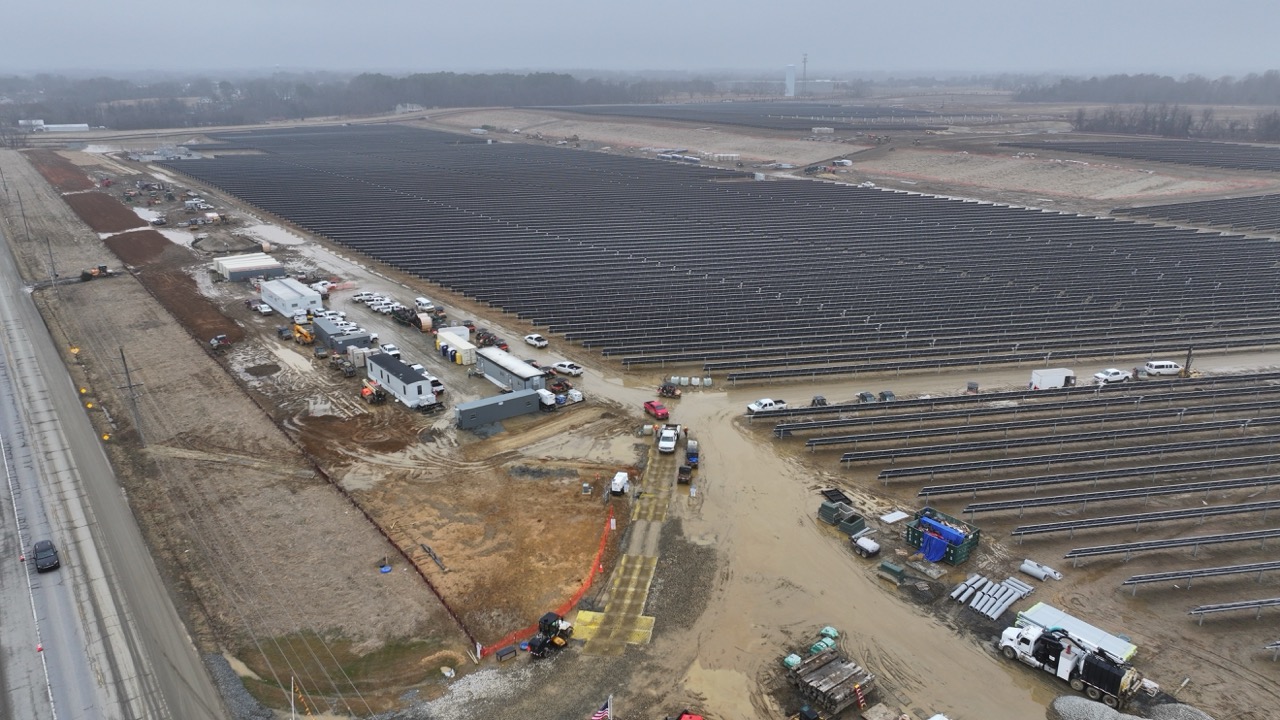
A proposal before the Maryland Public Service Commission (PSC) seeks approval for a solar project covering approximately 75 acres just outside Centreville in Queen Anne’s County. ESLC has formally opposed the project in a letter to the PSC. The project is structured as three separate facilities on a single parcel. While each individual application falls below Maryland’s 5-megawatt threshold for certain siting restrictions, the combined project does not. Together, the three facilities function side-by-side as a single large-scale solar installation totaling nearly 10 megawatts. The project is also located within a designated Tier 2 Growth Area. That Tier 2 Growth Area location is particularly significant.
Location, location, location
For more than twenty years, state and local leaders worked toward a shared vision for the US 301/MD 304 corridor outside Centreville where this project is proposed. Beginning in the late 1990s, Queen Anne’s County pushed the Maryland Department of Transportation to accelerate plans for an interchange at this important transportation crossroad. Over the following two decades, Maryland taxpayers invested approximately $50 million into planning, engineering, and construction of the interchange, overpass, and roundabouts that exist there today.
Those investments were not simply about reducing traffic delays. They were part of a broader economic development and smart growth strategy designed to direct future growth to an infrastructure-ready location while protecting downtown Centreville’s existing core, along Route 213, from increasing congestion. The growth anticipated for this area depends upon this very expensive infrastructure. Solar fields do not need roundabouts. Solar fields do not need an overpass.
4 jobs vs. 1400
Centreville designated this growth area as a future Technology Enterprise District (TED) envisioned for office, medical, technology, and light industrial uses. The Town’s Comprehensive Plan projected the area could eventually support approximately 1,400 jobs. By contrast, the solar company estimates: “Once operational, the facility will sustain ongoing employment, averaging 4 full-time equivalent jobs annually across direct, indirect, and induced categories.”
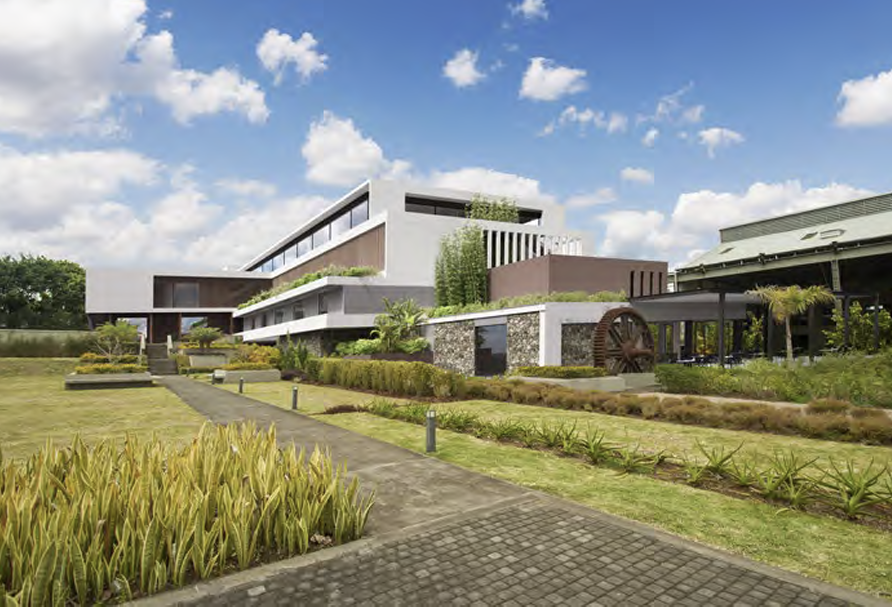
Converting approximately 75 acres—almost 50% of Centreville’s strategically planned 135-acre Technology Enterprise District—into what functionally operates as a utility-scale solar facility undermines the significant public resources invested here and subverts the long-term planning vision of Centreville and Queen Anne’s County. Carolyn Brinkley, Town Manager for Centreville, noted in a letter sent to the Public Service Commission, “This location is significant to the Town. These areas are not merely residual rural lands; they are part of the Town’s long-range municipal growth framework.”
Oh, look a sheep.
The proposal also raises important questions about the role of agrivoltaics — the practice of combining agriculture and solar generation. In this case, the project proposes a sheep grazing operation beneath the solar arrays. While diversifying the land management, the inclusion of limited grazing activity does not fundamentally change the larger land use and economic development questions surrounding this proposal.
As Maryland continues expanding renewable energy generation, the challenge is ensuring solar development occurs in ways that align with local planning goals, make responsible use of public investments, and preserve the long-term prosperity and character of our communities. Achieving that balance requires consistency, transparency, and adherence to both the letter and intent of the policies communities and the state have worked hard to establish.
by Carol Bean