Thriving in Disturbance:
Using Prescribed Fire to Maintain Habitats
Some people thrive in the bustle of city life, while others appreciate a more rural respite (us here at ESLC sure do – our mission is to protect, steward, and advocate for our unique rural landscape, after all). Not so different than you or me, birds also thrive within a specific lifestyle and way of making a living. A pileated woodpecker or Eastern screech owl specializes in nesting within tree cavities deep in our shady old forests, while Eastern meadowlarks and field sparrows are their own experts in open, sunny, young, grassy, and shrubby fields.
To stay “young”, these open grassy and shrub-dotted habitats require and fundamentally depend on frequent disturbance events – such as fire. Left to nature’s will, an open grassy meadow speckled with black-eyed Susans one year will quickly turn thick with sapling sweetgum and black cherry and loblolly pine. This is the way of “ecological succession”, the gradual and predictable process of species composition changing over time: bare earth becomes grassland, grassland becomes scrub, scrub becomes young forest, and young pine forests turn into the final stage of old growth oak and hickory forests. Natural sources of disturbance – wind, major storms, disease, fire – reset the “clock”, so to speak, along any interval on the succession timeline and in varying intensities. A single tree can fall in a forest to allow for a shrub to emerge in a pocket of newly available sunlight through the once-closed canopy; a whole forest can be leveled by a hurricane and have a grassy plain emerge in its place.
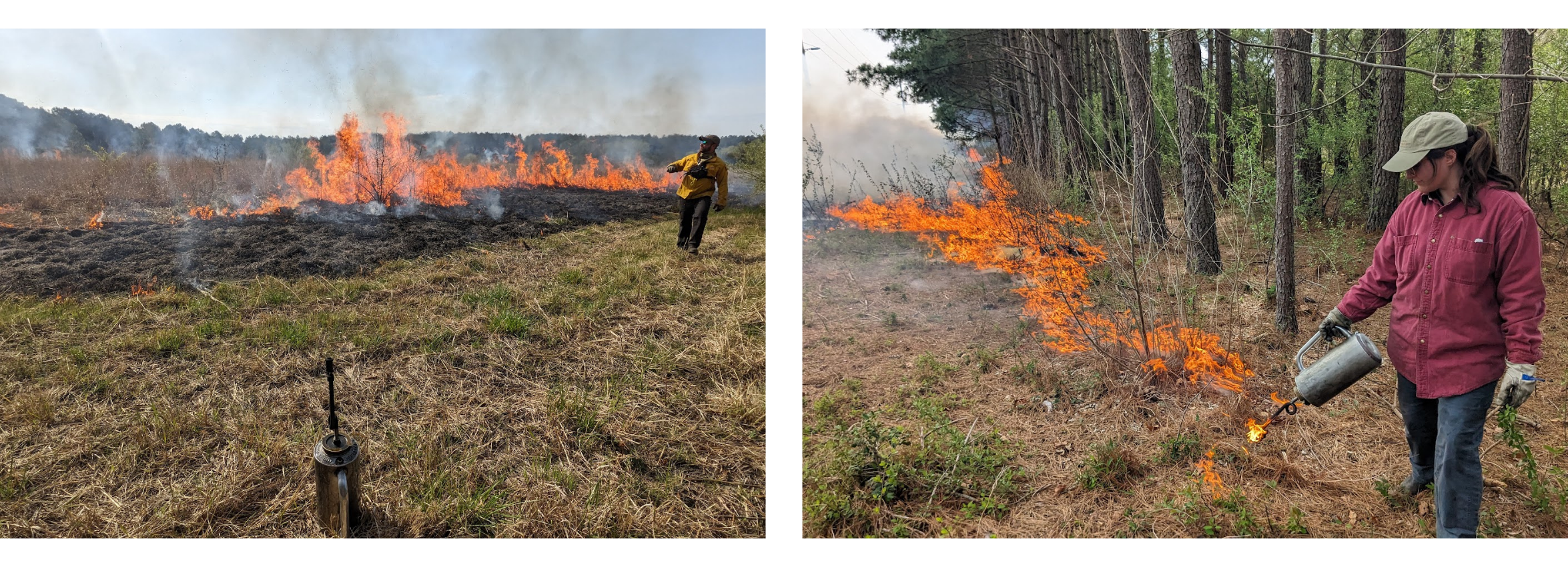
Pre-anthropogenic influence on the landscape, low-intensity fires shaped the Delmarva peninsula as regularly as every 4-10 years. For disturbance-dependent habitats such as meadows, this regular interval of fire ensured the balance of young, early successional habitats within the mosaic of old growth forests on the Shore. Today, in addition to rapidly occurring habitat loss due to modern changes in land use, lack of management to reset ecological succession where habitat remains standing has resulted in the loss of 43% of North America’s grassland birds across the continent. In Maryland alone, 83% of grassland birds and 57% of shrubland birds have experienced significant declines in population since 1966, according to the North American Breeding Bird Survey.
This alarming and rapid population loss has spurred countless conservation programs across the country. In 2025, ESLC was the recipient of grant funding from the Cornell Lab of Ornithology’s Land Trust Bird Conservation Initiative (LTBCI) to support “Biologically Beneficial Blazes”: Promoting and Accelerating the Use of Prescribed Fire to Enhance Bird Habitat on the Eastern Shore of Maryland. Cornell’s LTBCI seeks to connect with and support land trusts in their efforts to protect bird habitat on private lands and for birds to help support land trust planning and stewardship efforts. Through this initiative, ESLC has partnered with the organization Tall Timbers to promote and accelerate the use of prescribed fire to enhance and manage bird habitat on the Eastern Shore through education, engagement, and outreach. Thanks to this opportunity, the meadows of Piney Grove Estate in Chestertown (protected by ESLC in 1992) will be managed by prescribed fire for the first time since their installation in 2022 through the Natural Lands Project on February 26th, through a live fire demonstration. Due to overwhelming interest in the event, attendance has reached capacity, and there is now a wait list.
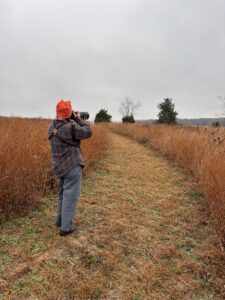
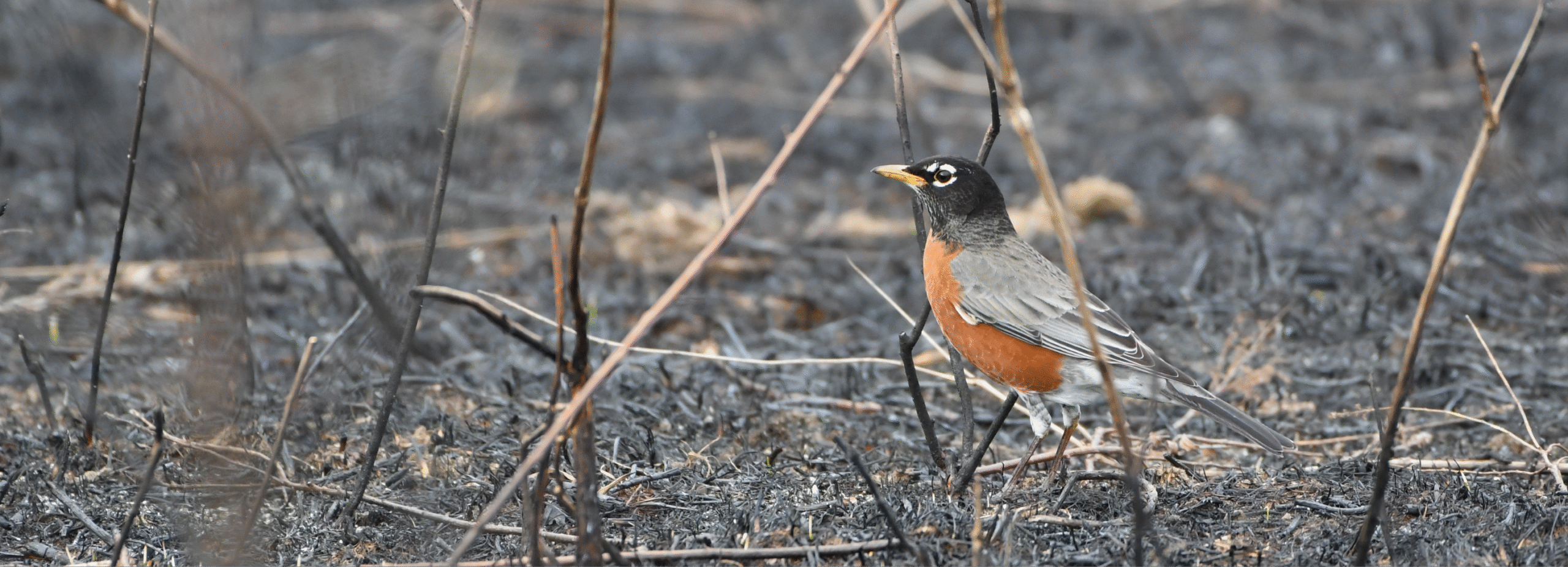
The Cornell Lab of Ornithology manages the platform eBird, a website and application that allows birdwatchers to submit their winged observations to a global database that fuels scientific research, conservation planning, and population modeling. ESLC’s enhanced stewardship manager Larisa Prezioso has been utilizing eBird for compiling observations at Piney Grove – not only to efficiently report back to the grantor of this opportunity, but to simultaneously monitor the health of the habitat and to evaluate the performance of the burn as a management tool. The species observed act as “bioindicators”, lending evidence to management effectiveness. Monitoring populations overtime can inform longer-term management decisions, and well as provide early indications of ecological succession. When a field that once boasted numerous grasshopper sparrows begins to yield to scrub-loving brown thrashers and white-eyed vireos, it may be time for an ecological “reset”, if maintaining open meadow is the long-term goal.
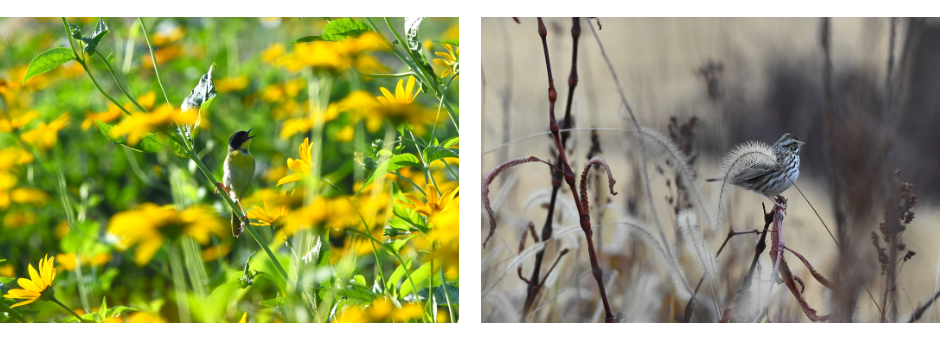
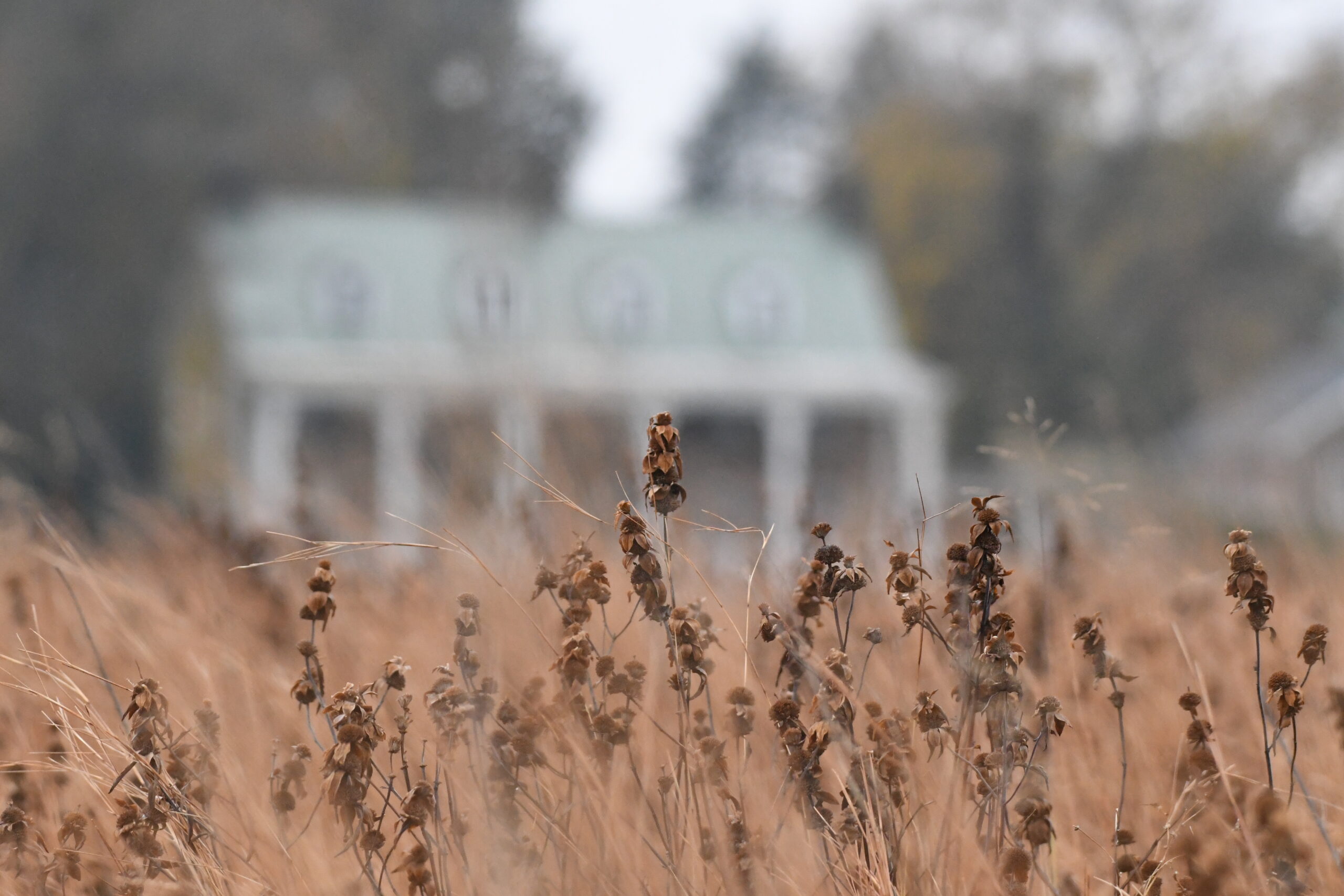
Since converting agricultural row crops to habitat in 2022, the fields of Piney Grove now boast tremendous populations of grassland and shrub dependent birds. Summers paint scenery of vibrant pairs of breeding common yellowthroats picking caterpillars off oxeye sunflowers for their young; charms of goldfinches bobbing over black-eyed Susans; richly jewel-blue indigo buntings perching on emerging stems of goldenrod searching for grasshoppers. Fall dormancy makes way for streaky and elusive song sparrows and savannah sparrows foraging the seed heads of desiccated bergamot and beebalm while resident Eastern bluebirds perch on top of gnarls of pokeweed to observe their territory. With so much life in the form of birds and flowers within the line of eyesight, it can be peculiar to imagine that much of a meadow’s life (or “biomass”, if you will) lies beneath the surface, as well as a seedbank waiting patiently for the chance to emerge and restart the cycle of becoming a meadow once again.
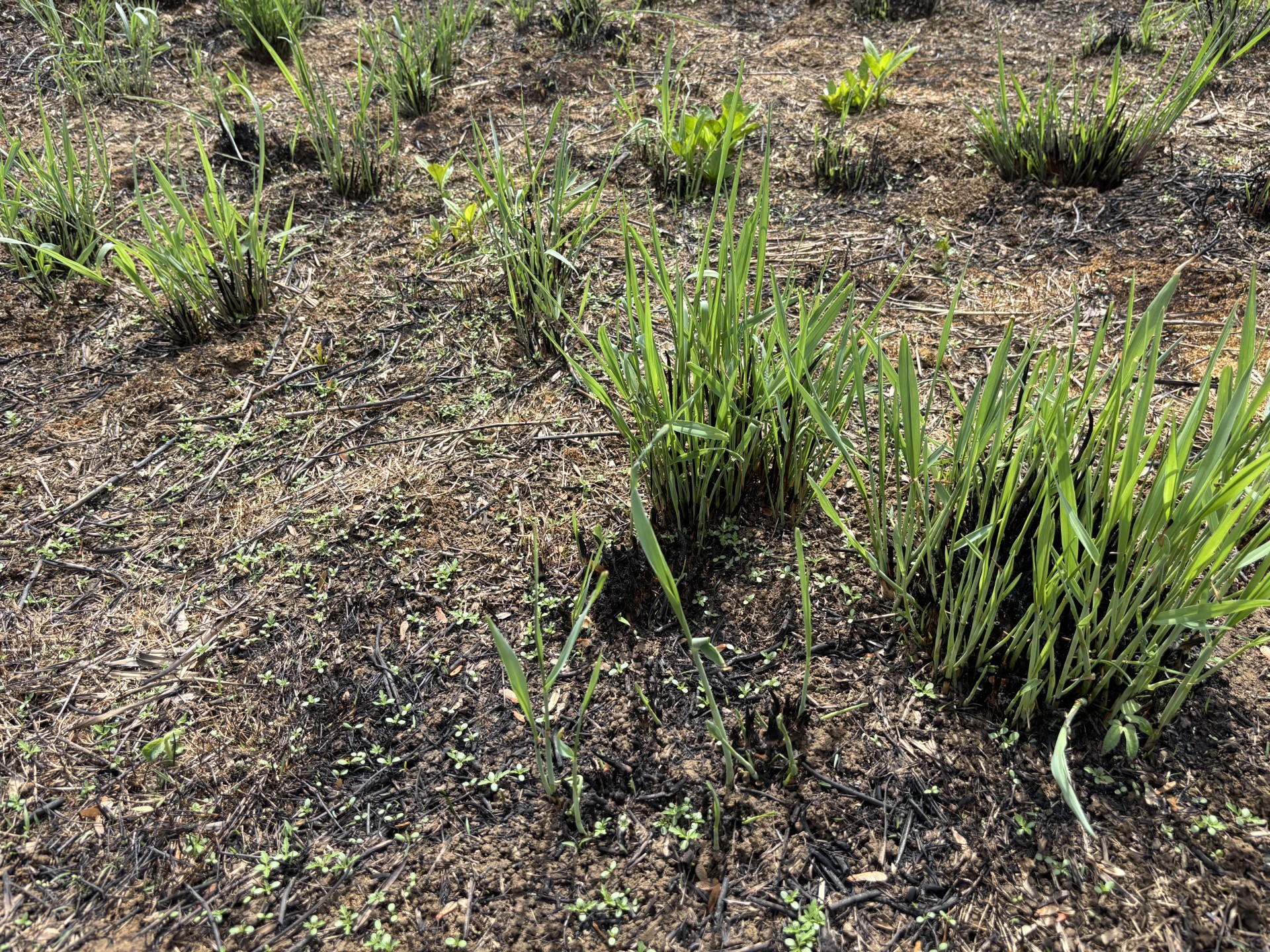
The controlled burn on February 26th at Piney Grove will give this underground life a chance to re-emerge in the spring. The slow and controlled flames will clear thick layers of suffocating thatch and suppress dominant grasses to support a better balance of wildflowers and legumes (like partridge pea). Intentionally planned for the cusp of late-winter and the start of warmer days to come, the meadow has finished supporting overwintering birds with food and forage and will be cleared before spring migrants arrive to establish their summer nests. The newly opened ground will restore vital space for ground-nesters to build; the fresh forbs will host beetles and prized caterpillars for parent birds to feed their young. In the timeline of the field, the post-burn black will last no longer than a month. The “green up” of grasses and flowers will quickly rebound, and by the thick of summer, it will almost look as though nothing ever happened. But of course, something did. Something must, for a meadow to be a meadow – and the birds who depend on it will thrive because of it.