
What the Recent Bay Bridge Vote Means for the Eastern Shore
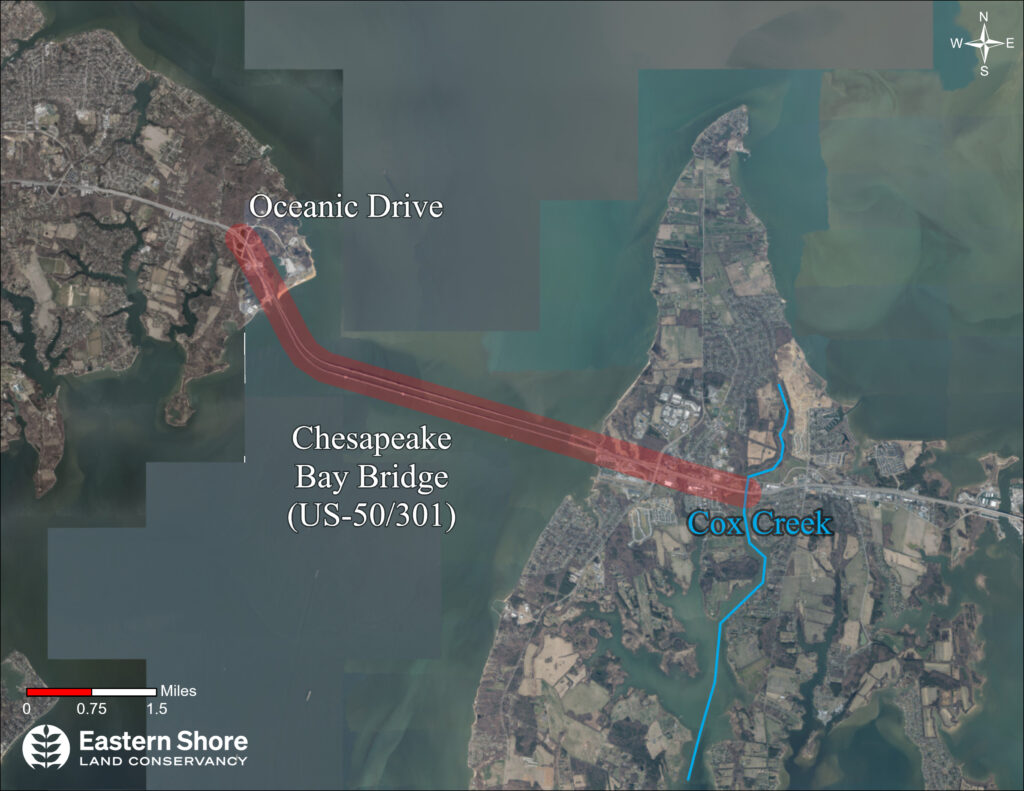
Earlier today, the Maryland Transportation Authority (MDTA) voted unanimously to approve the next step in the formal National Environmental Policy Act review process for the construction of a new Bay Bridge. The MDTA has recommended Alternative C as the so-called ‘preferred alternative’, meaning that all other locations and bridge configurations will not move forward. The only possible building scenario that remains under consideration is within the current bridge corridor, with the phased construction of two entirely new four-lane bridge spans, the phased removal of the existing bridges, and the expansion of Route 50/301 from west of Oceanic Drive to east of Cox Creek to eight lanes. The proposed eight-lane corridor is highlighted in the map below.
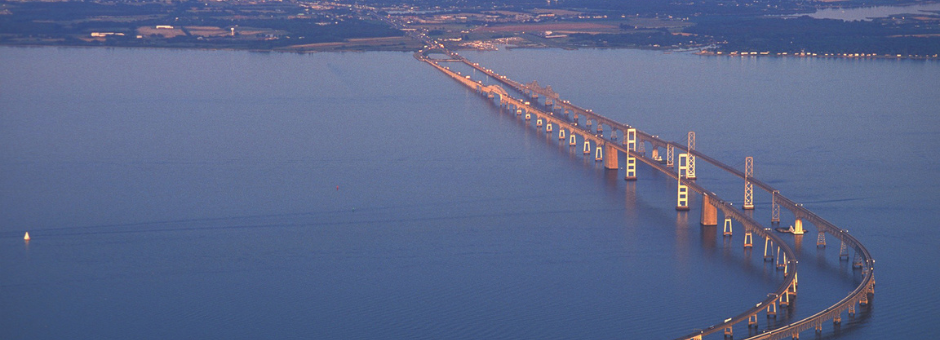
Eastern Shore Land Conservancy has long been concerned about what a new Bay Bridge means for the Eastern Shore, because we know what the first two Bay Bridges meant for the Eastern Shore: major spikes in development. Growth on the shore surged after construction of both spans from 10,000 total acres of land developed by the 1940s to 173,00 acres today. Nothing has shaped the Eastern Shore, for better and worse, like the Bay Bridge.
While the bridges have certainly brought many positive changes to our region, much of the growth that occurred following bridge construction was low-density sprawl, development that continues to strain the infrastructure budgets of our local governments and erode the rural character of our region. Without a meaningful commitment to comprehensively fund land conservation and adapt land use and zoning laws as part of any new bridge construction, there is no reason to think a new bridge won’t bring the same influx of growth and development as the current bridges. And the question becomes, just how much more of this can the Eastern Shore stand before it is a place we won’t recognize?
We still have time to shape the outcome. Today’s action is in no way a commitment to start building, and no funding has been earmarked for construction, which is estimated to cost more than $17 billion in today’s money. All of this is of course complicated by the ongoing, and expensive, reconstruction of the Key Bridge tin Baltimore. The draft Environmental Impact Statement with all the details about Alternative C will be released in January 2026 and a series of public hearings are slated to begin in February.
This is the work ESLC does. Remaining informed and actively engaged throughout a years-long process to constantly and consistently advocate for the best outcome for the Eastern Shore. We will share information and ways to be involved throughout, so check back often.
Learn more about the proposal and upcoming public comment opportunities: https://www.baycrossingstudy.com/