
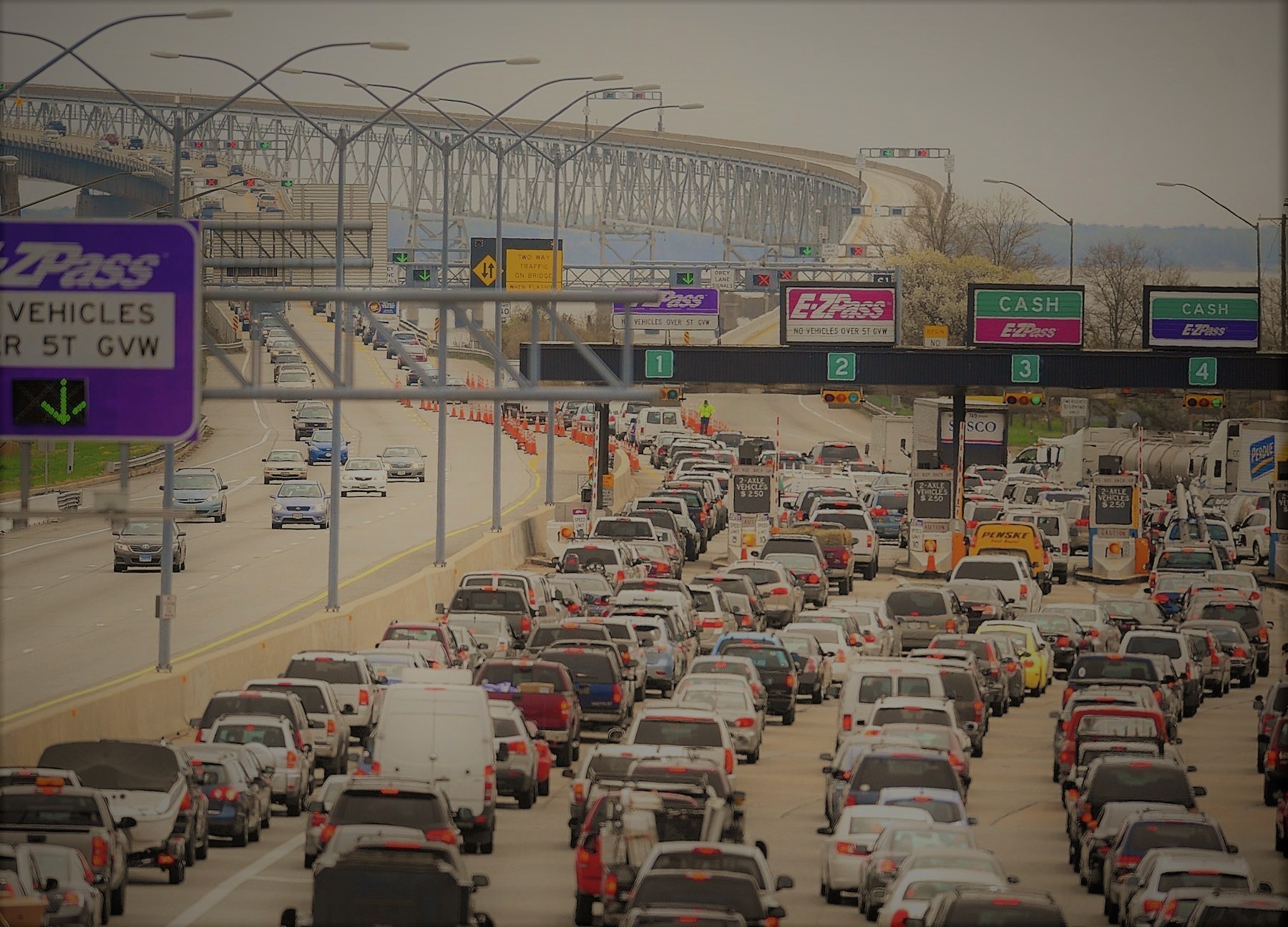
2026 New Bay Bridge Poll
A new poll commissioned by ESLC shows 63% of likely voters across the Midshore support the construction of a new Chesapeake Bay Bridge, with 72% of those citing improved traffic flow and reduced delays as the primary reason for their support. But the poll shows an even stronger majority of respondents, 95%, believe prioritizing farmland and open space protection as part of the new Bay Bridge is important.
ESLC has worked for months with conservation partners, county governments, and state agency officials to ensure any effort to build a new Bay Bridge includes dedicated funding for land conservation; it is important to note this new poll reveals that 85% of the residents in the most-impacted counties support the creation of just such a fund.
Composite top line results and results for each county are linked below.
This scientific poll was sponsored by Eastern Shore Land Conservancy and conducted by Susquehanna Polling and Research, with interviews of 1,250 likely voters from Caroline, Kent, Queen Anne’s, and Talbot County between September 7-20, 2026. The margin of error is +/- 2.77% at the 95% confidence level.
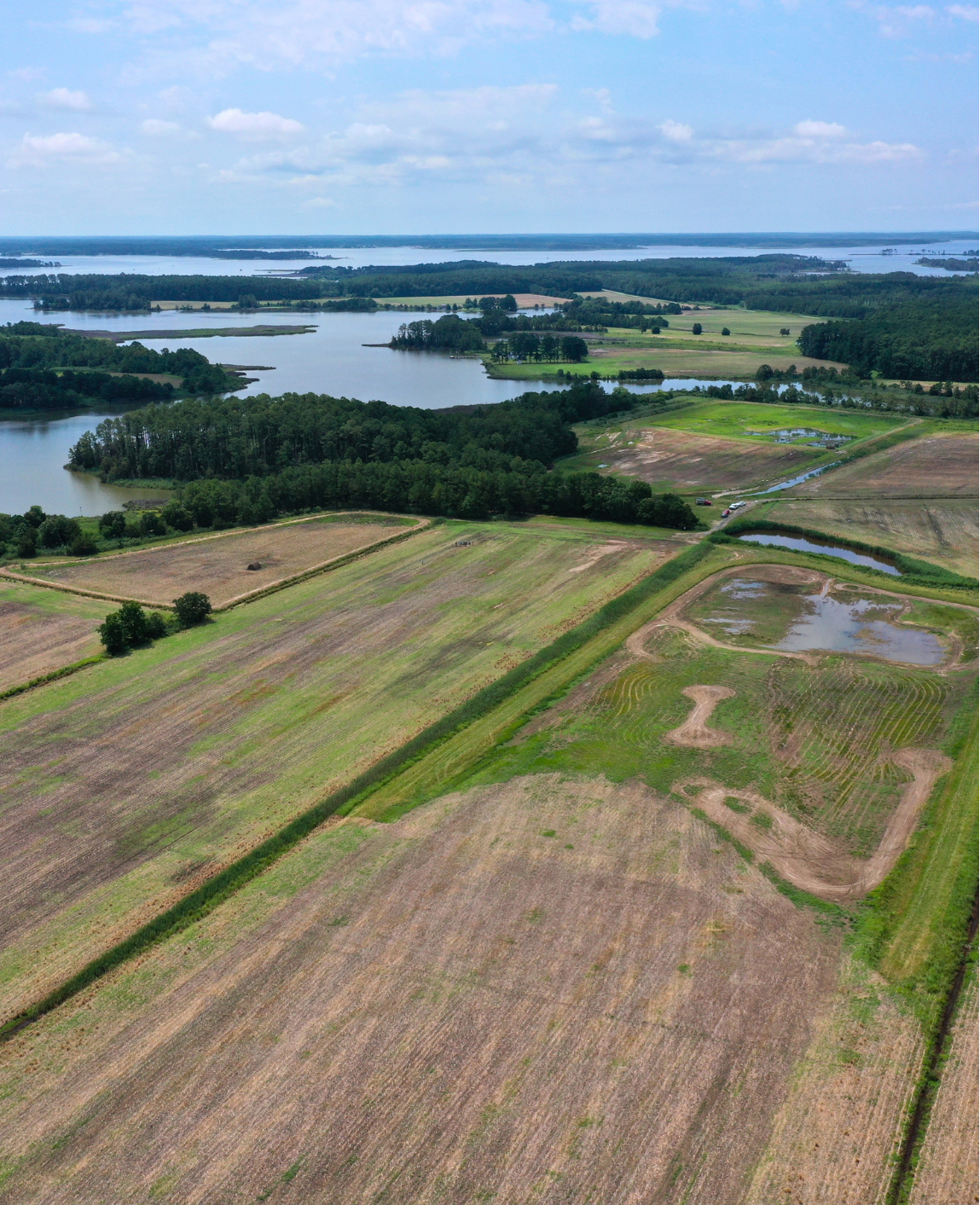
CARE Resource and Resilience Guide
Farmers across coastal Delmarva are facing a range of challenges associated with extreme heat, drought, flooding, severe storms and changing growing conditions. Understanding these challenges and identifying practical ways to help farms remain resilient and economically viable is increasingly important to the future of the region’s agricultural economy and working lands.
ESLC is a member of the Steering Committee for the Community Agricultural Resilience through Extension (CARE) project, a collaboration among Extension colleagues in Virginia, Maryland, and Delaware. As part of the project, the CARE Resource and Resilience Guide has been released as an interactive StoryMap with the goal of becoming a “one-stop shop” where farmers and Cooperative Extension educators can find information, data and resources related to climate challenges facing agriculture.
The guide includes information about climate hazards, maps and data, examples of resilience practices, and links to technical and financial resources. This is the first iteration of the resource, and it will continue to grow and improve over time.
Farmers, Extension educators and others can help build out the guide by sharing feedback and contributing additional resources through the evaluation form.
The CARE project was made possible through funding from the National Oceanic and Atmospheric Administration Office for Coastal Management awarded in 2024.
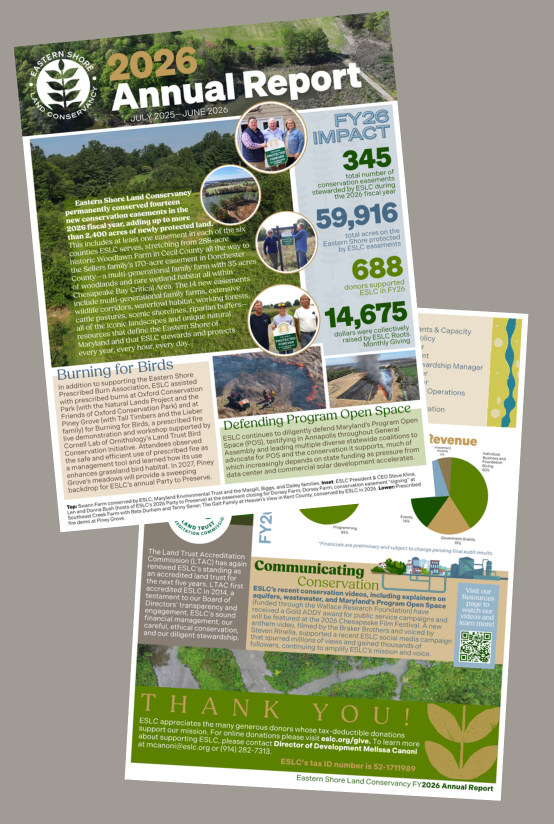
ESLC 2026 Annual Report
In the 2026 fiscal year, ending June 30th, Eastern Shore Land Conservancy permanently conserved 14 new conservation easements—including one in each of the six counties ESLC serves, stretching from 288-acre historic Woodlawn Farm in Cecil County all the way to the Sellers family’s 170-acre multi-generational family farm in Dorchester. This raises ESLC’s total conservation easement protection to more than 59,916 acres across the Eastern Shore of Maryland.
From new easements to pivotal advocacy in Annapolis, award-winning educational videos, and innovative land stewardship strategies, ESLC continues to lead on local, state, and regional levels as we conserve, steward, and advocate for the unique rural landscape of Maryland’s Eastern Shore.
Read more about our impact in ESLC’s 2026 digital annual report!
How we keep forests on Maryland's Eastern Shore
Since 1990, ESLC has helped to conserve more than 67,000 acres of land on the Eastern Shore of Maryland. Our second largest land use (more than 22,000 acres) is forest. But the same amount of forest acreage it took 36 years to protect is now lost to other uses every year in Maryland. Healthy forest stewardship is essential for wildlife, outdoor recreation, climate resilience, water quality, and forestry—a 3.3. billion dollar sector in the state of Maryland (100 times bigger than the seafood industry). Watch our video to learn more!
Donating a Conservation Easement
Are you interested in protecting your land through a donated conservation easement? Our how-to guide reviews the basic process step by step. For additional detailed information including specifics on tax benefits and fees please refer to our full folio:
How land conservation protects our water
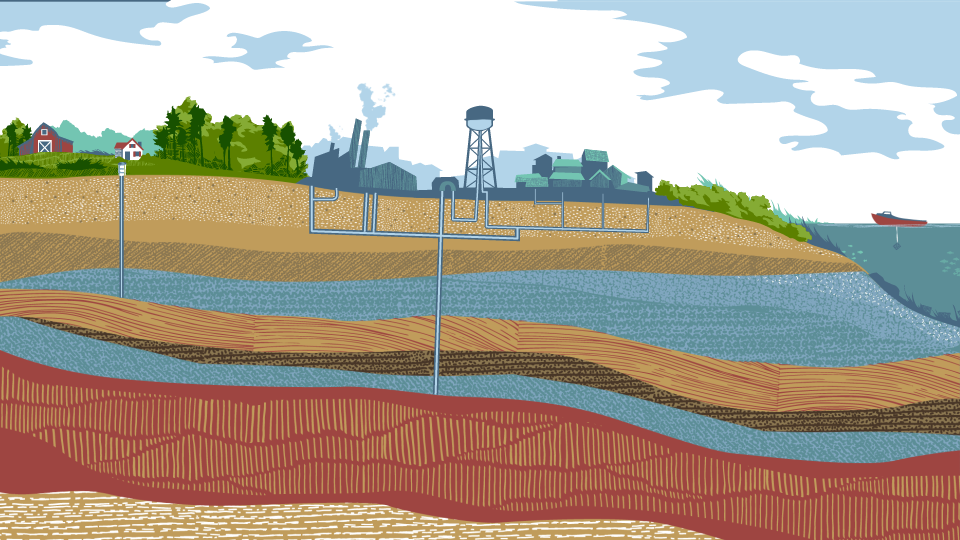
It can be easy to take water for granted, especially in a place where it seems like we could never run out. But the truth is—we can. On the Eastern Shore of Maryland, our drinking water does not come from the rivers we see every day—it originates below ground in aquifers. Those aquifers are limited. Sprawl, droughts, pollution, and saltwater intrusion threaten both the quality and quantity of our clean water. But conserving land can help to protect the water we all share. Responsible wastewater treatment paired with sustainable development can protect it even further.
Thanks to generous funding from the Wallace Research Foundation, ESLC is excited to share two new conservation explainer videos about aquifers and wastewater treatment! Each about one minute long, these quick videos are a great resource for residents, students, local leaders, and professionals who want to better understand the water we use every single day.
ESLC 2025 Annual Report
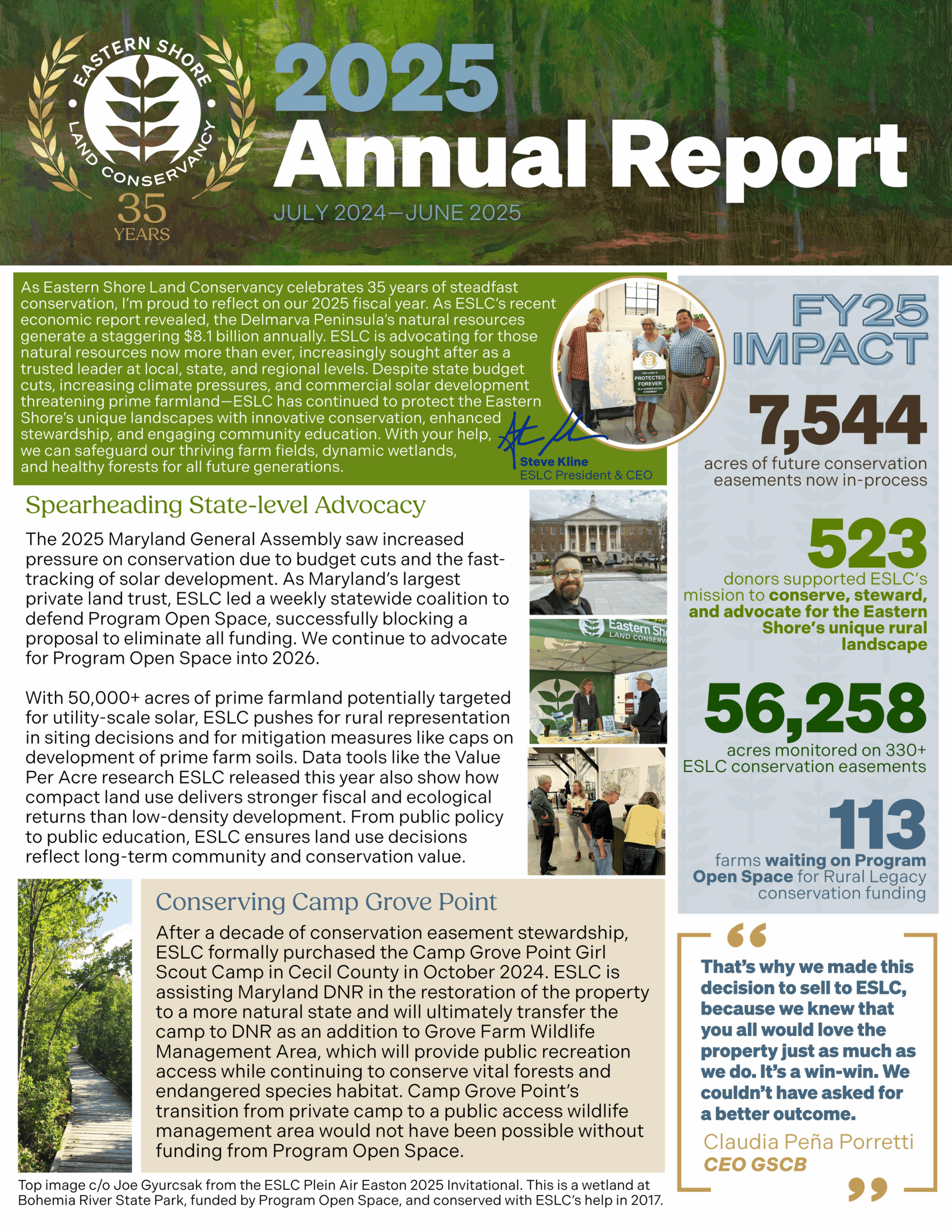
The 2025 fiscal year has been a busy one for ESLC. From state-level conservation funding advocacy to groundbreaking restoration projects, ESLC continues to pioneer new tools and approaches, all while maintaining a steadfast program of conservation easements and annual stewardship.
What's in that Field?
Although the Eastern Shore constitutes only 37% of Maryland’s land mass, it produces 74% of all Maryland agricultural sales. And every day residents and visitors of the Eastern Shore drive past countless farm fields wondering what’s blooming, what’s being harvested, and what’s being planted. This year, ESLC is helping to dispel some of those mysteries with the help of local farmers. From multi-species cover crops to crimson clover, barley, wheat, and more, join along to learn more about the Eastern Shore’s productive and ever-changing landscape.
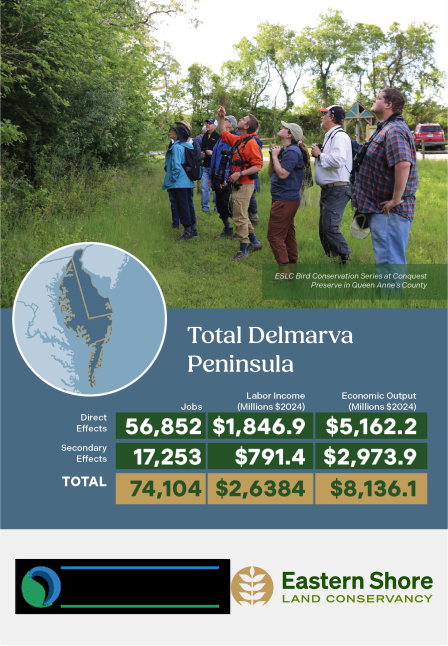
Economic Report: Natural Resources Conservation on the Delmarva Peninsula
ESLC and the Delmarva Restoration and Conservation Network (DRCN) released an expansive report showing the economic impact of natural resources conservation on Maryland’s Eastern Shore and the entire Delmarva Peninsula. Conducted by Sage Policy Group, the report is titled, “Natural Resources Conservation on the Delmarva Peninsula,” and draws on input data from the U.S. Bureau of Labor Statistics, the U.S. Census Bureau, and state and local government financial documents to model critical impacts. The study includes data, several case studies, and community spotlights that highlight the voices of the Eastern Shore through the perspectives of local business owners and community members benefitting from ongoing environmental conservation.
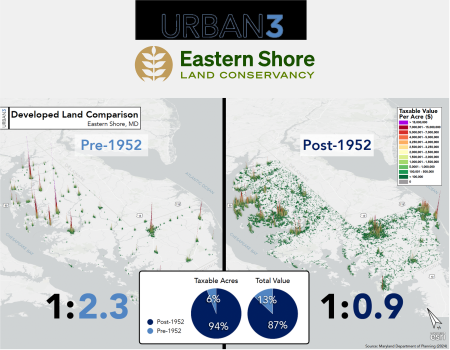
Value Per Acre Land Use Data
In 2024, ESLC partnered with Urban3 to study land use patterns across eight counties on Maryland’s Eastern Shore. Their analysis uses a “value per acre” measurement, which contrasts public investment in infrastructure and services with property tax revenues. Urban3 resources, data, and modeling maps will be made available here for the use of local leaders and community members.